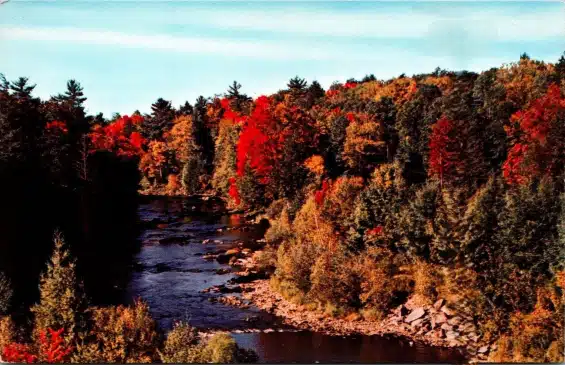
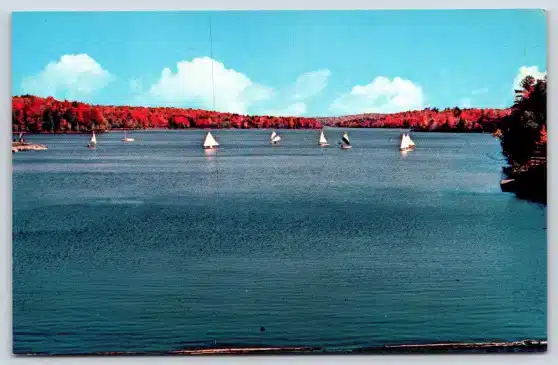
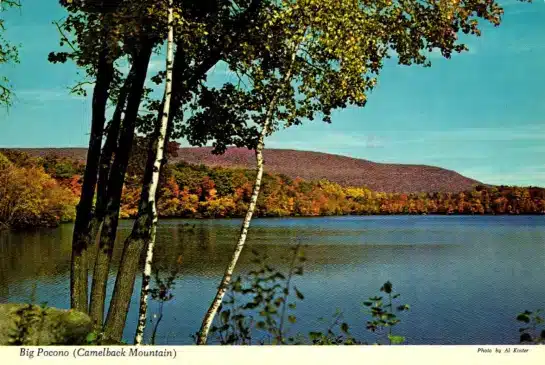
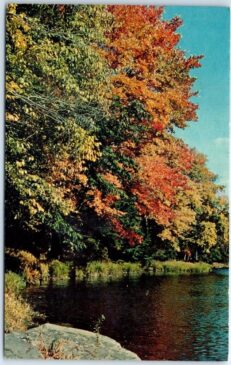
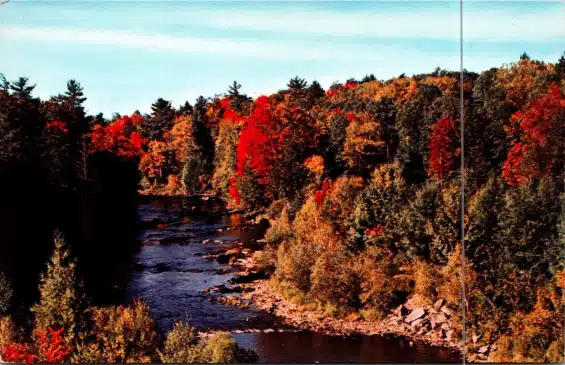
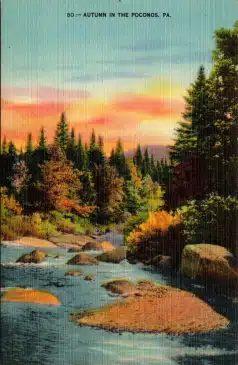
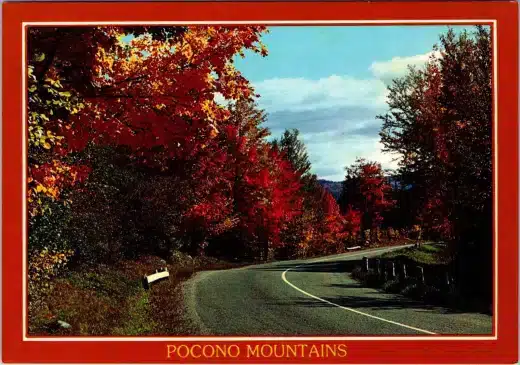
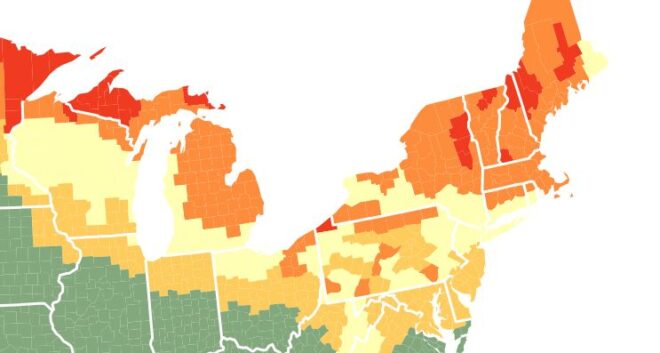
While the summer is a beautiful time for recreation in the Poconos, the fall is IMHO the most beautiful time in the Poconos. No need to drive all the way to Vermont, you’ve got it right here in our backyard. We’ve just published an entire series on the history of the Pocono Region and our favorite, Lake Naomi.

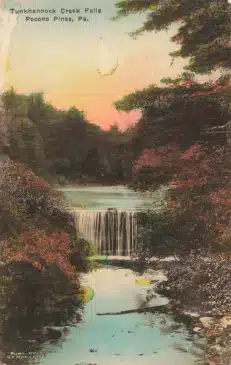


The Tobyhanna Creek and Tunkhannock Creek watershed is a landscape shaped by ice, water, and people. Covering approximately 129 square miles in the headwaters of the Lehigh River, its creeks and lakes were carved by glaciers thousands of years ago, leaving behind cold, clear waters that have become home to native brook trout and numerous species of birds and wildlife.

“This brochure was made possible in part by a grant from the Keystone Recreation, Park and Conservation Fund administered by the Pennsylvania Department of Conservation and Natural Resources, Bureau of State Parks. Additional support was provided by the Pennsylvania Fish & Boat Commission, the Pennsylvania Environmental Council, and the Pocono Forests & Waters Conservation Landscape.”
The series I’ve been researching began as an effort to rebuild my youthful memories of growing up on Lake Naomi in the Poconos starting in the 1960s. As the stories came together, I wanted to start an online dialog with others who might also remember. I’ve created an associated Facebook Group, called Lake Naomi Memories, for anyone to share their memories that will help create a digital footprint on the web. Oh, and they’ll certainly help me remember as well. Link below – enjoy the series!
Tobyhanna Creek / Tunkhannock Creek Watershed Transcribed So We Can Read IT!
For centuries, this region supported industries that relied on its natural abundance—its forests fed sawmills and tanneries, its lakes supplied blocks of ice shipped by rail to cities, and its quarries and mills sustained growing communities. The arrival of the railroad, followed by the development of highways, ushered in a new era of resorts and recreation, transforming the Poconos into a popular destination for vacationers and outdoor enthusiasts.
Today, the watershed is dotted with state parks, preserves, and beloved landmarks like Lake Naomi, Stillwater Lake, and Bushkill Falls, each carrying a piece of its natural and cultural history. Conservation groups and local communities now work together to protect this place, celebrated as one of the “Last Great Places on Earth,” ensuring its forests, wetlands, and streams continue to inspire future generations.
We see it, but we can’t read it….. so here are the details:
Here’s the full transcription:
The Tobyhanna Creek/Tunkhannock Creek Watershed comprises approximately 129 square miles of the Lehigh River’s headwaters. Almost 90% of the land draining into the Tobyhanna, which means “a stream whose banks are fringed with alder” in the Lenape language, is located in Monroe County; the rest lies in Carbon and Wayne Counties. There are two tributaries with the name Tunkhannock (which means “small stream” in Lenape): the Upper Tunkhannock and the Tunkhannock Creek.
The watershed’s landscape resulted from the retreat of the Wisconsinan glacier over 13,000 years ago. Leading up to the final glacial retreat, this region had been subjected to multiple glacial periods that wore down and eroded the formerly more mountainous terrain to form the Pocono Plateau. As the ice of the last glacier melted, releasing its accumulated load of ground rock and soil, it left behind vast swamps and boreal bogs, as well as massive boulders and rock fields. The wetlands that the landscape has been filled with over thousands of years, with mighty forests, teeming with plants and animals.
Over the past three centuries, the watershed’s character has undergone rapid evolution from a forested wilderness, experiencing periods of extensive resource extraction, primarily by the timber and ice harvesting industries, and subsequently serving as a tourist retreat. The construction of interstate highways, beginning in the 1960s, facilitated the transition to the current era of increasing residential and commercial community development, which has accelerated over recent decades. Despite this growth, the watershed remains a significant but threatened wildland and limited human impact that The Nature Conservancy, one of the foremost environmental advocacy organizations in the world, has placed the region on its list of “Last Great Places” on earth.
Vacation Retreats and Tourism Hot Spots
Since the impacts of logging on the landscape, the watershed also developed as a place to escape the crowds and confines of modern life, starting in the late 1800s. Pushed upward by industrial disorder, the wind-swept attractiveness of the watershed found appeal for recreation, fishing, and hunting. The railroad network developed for the lumber industry provided passenger service; however, water taxis and hotels were established around existing railroad depots, such as the Naomi Pines House (later the site of Dr. Schultz’s Aldine Mansion). The advent of the automobile ultimately cut off the country’s access to its lakes, many of which inspired the development of vacation communities and summer youth camps. These ideas continue to attract vacationers each year.
- Big Boulder Mountain – Pennsylvania’s first commercial ski resort (1947). Now part of Jack Frost/Big Boulder.
- Bushkill Falls – “The Niagara of Pennsylvania,” a set of eight waterfalls and hiking trails.
- Tobyhanna State Park – 5,400 acres with a 170-acre lake, camping, boating, hiking, and swimming.
- Austin T. Blakeslee Natural Area – 130-acre preserve with waterfalls, forest, and hiking trails.
- Tobyhanna Mills and Audits Mills – Early grist and lumber mills powered by stream waters.
SPLIT ROCK & BIG BOULDER MOUNTAIN
A special significance among the watershed’s resort areas is the Lehigh Tannery area, which includes Big Boulder Mountain. This facility opened in 1946, near Pennsylvania’s first constructed ski area, and pioneered the commercial use of snow-making in 1956. From this groundbreaking ski industry, which helped the Poconos become a widely recognized recreational and vacation destination, the resort area now features Split Rock, a sporting playground with increased ties to the tourism of the Allentown-Bethlehem area. Whenever the facility has been “built out” in one interest, back to hotel services and a lakeside lodge, to Lake Harmony, to golf, the continuing attraction within a few to Split Rock and the nearby Big Boulder Mountain, also pioneered by snowmakers.
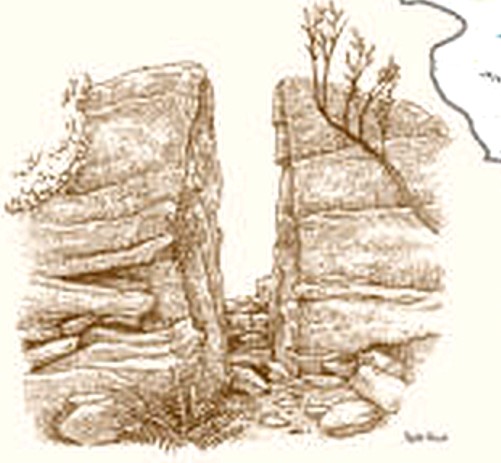
1 Sullivan Bridge & Hungry Hill
Remains observed where the original timber trestles that Sullivan connected on the Great Swamp. Nearby, stone-cutting works are still visible today along the watershed trail routes, which include the Sullivan Trail community, where people foraged the area during the American Revolution. General Sullivan’s troops that made their way in 1779 on route to New York passed by a campsite on the Longbottom lands near Austin Trestle and William Burr. Remnants include still-noted quarry and ice bridges with massive Tunkhannock features. The Sullivan Trail today still holds original sections that helped Sullivan’s Army move through. The monument located nearby commemorates the many supplies and lives lost that were so difficult of traversing difficult northern ridges to repel the autumn pursuits of the enemy’s British.
Vacation Retreats and Tourism
As logging declined, the Poconos evolved into a popular vacation and recreation region. By the late 1800s, railroads brought visitors for hunting, fishing, and fresh air. Boarding houses, grand resorts, and youth camps flourished, a legacy that continues to this day.
2. Split Rock & Big Boulder Mountain
Big Boulder Mountain, which opened in 1946, pioneered snowmaking in 1956, helping to launch the Poconos as a premier ski destination. Resorts expanded around Split Rock and Lake Harmony, combining golf, hotels, and recreation.
3 Tobyhanna Falls / Blakeslee Natural Area / Tost Park
The falls area downstream from Austin Trestle is the headwaters for the scenic natural areas and 130-acre park that contains Tobyhanna Falls. Serving as a classroom of Monroe County’s former Forestry School, the area is dedicated to protecting lands for continuing recreational education in the Poconos. Starting in 1932, this area drew families for recreational enjoyment, offering safe woodland nature tours, sweeping picnic grounds, sporting fields, and scenic trails. Unfortunately, the ridgelines of “Toby Park” were devastated by the 1955 flood. However, families continue to visit Tobyhanna and enjoy the recreation and trails in the mature beauty and wildness of the area, where the sweet, flowing water near the rocks runs into a beautiful waterfall.
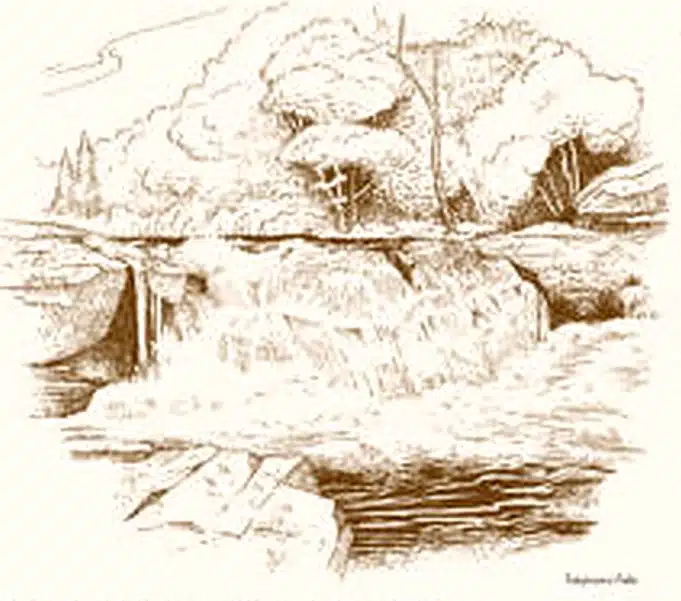
4 Harnerstown Falls
Harnerstown Falls is one of the major waterfalls on the Tobyhanna Creek. The flood area was during the 1955 hurricane, and the flooding that followed became a lasting reminder. Harnerstown is the Dam across the area now, and this recreation area adds hikes to it. The State Game Land #127 flows just along the 115.
5 State Game Lands / Hunting & Fishing
Nearly one-fifth of the watershed is designated as Pennsylvania State Game Lands (numbered 127), on the west/east of the stream straddling the Tobyhanna Creek and its reservoir landmarks: 2,400-acre Pocono Lake. The area of these game lands contains natural resources that support many forest communities, thereby fully protecting open spaces. These lands are part of the public domain, available for recreation, hunting, and fishing, and are accessible from Route 940 and Interstate 380. The waterways in these areas provide both excellent and native trout fishing communities.
6 Tobyhanna State Park
Tobyhanna State Park, which encompasses 5,440 acres, was once one part of an 11,000-acre Army training facility, established in 1910 and known through the years as Camp Summerall, Camp Tobyhanna, and Tobyhanna Military Reservation / Tobyhanna Artillery Range. The Army finally turned the lands back in 1949, as the Army shrank the Pocono Military area’s huge property.
The State Park features a mix of rugged highlands and wetlands, wet meadows, open bogs, and evergreen forests. A man-made 170-acre lake provides opportunities for boating and fishing. Public amenities include a large beach, day-use picnic areas, a modern bathhouse, and seasonal boat rental. Over 10 miles of trails allow recreation in all seasons, with access to hunting and other outdoor activities.
Natural Resources
Since access to the interior of the watershed had been restricted, the process of opening the area’s resources began. The two primary early influences were logging and the harvesting of ice, as well as peat mining and cranberry farming.
7 Tobyhanna Mills and Naeder’s Mills
The watershed’s major harvest of 300,000 board feet of virgin eastern hardwood and hemlock trees is so dense that it takes a day’s travel to cross a tract of these timberlands. In “The Shades of Death” locations, they discovered multiple sawmills for their harvests. This sustained resource lasted for the rapid growth of the logging industry in the 1800s. Logging roads and community settlements were built to support the transportation of logs, but not without incurring dramatic losses to the forests and causing community hardship. Furthermore, in finding a watershed factory in Tobyhanna, PA, it was used to process natural resources. However, by 1906, only vast areas of growth were removed, and the state halted logging in these huge areas.
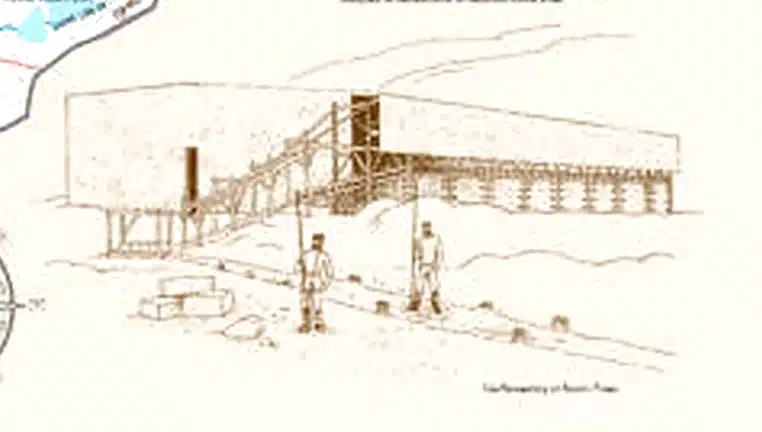
8 Commercial Ice Harvesting
The process of creating secluded tension between rocky highlands, which was ideal for the creation and use of the watershed’s commercial ice harvesting industry, involved the construction of numerous artificially large earthen areas from imported compartments of pre-formed wood dams. One such area, built at Stillwater Lake in 1902 (Lake Naomi), Tunkhannock Lake, and Tobyhanna Lake, was also initially constructed for commercial ice harvesting. Huge blocks, sometimes as much as two feet thick, of the Poconos ice industry were removed in the winter and were stacked between ground sawdust to insulate the masses of exported ice down to Florida. At the industry’s peak, over 100,000 tons of ice per year were shipped during the summer months from the Poconos area to serve the major metropolitan areas. The introduction of the mechanical ice machine in the 1920s, as well as the widespread adoption of modern electric ice machines in the 1940s, ended a global business, but many of the old historic booms, having been adapted for recreation at outdoor lakes, have remained.
Last Great Places Preserves
Although the watershed’s forests were almost entirely clear-cut by 1930, the cleared but generally swampy and nutrient-poor lands were not attractive for widespread agricultural settlement. With limited development pressure, nature rebounded spontaneously and uniquely. In particular, the Long Pond area supports the highest concentration of globally rare species (xeric) and natural communities in Pennsylvania and embodies the region’s broad heritage, harboring extensive tracts to cedar-treacherous remnant of its glacial past.
9 Tunkhannock Preserve / Adam’s Swamp & 3 Maple Tract
Two major Nature Conservancy Long Pond Preserves provide the Long Pond Watershed with high-value buffer habitat that includes forest and marsh communities, acidic shrub swamps, and boreal conifer swamps.
10 Long Pond Macrosite Preserve / Hauser Nature Center
The Nature Conservancy’s Long Pond Macrosite Preserve begins at the Nature Conservancy’s offices in Newfoundland, the former hospital site in Pennsylvania. For the international class and students’ academic and natural connections, the preserve features an extraordinarily diverse landscape comprising complex habitats that support a diversity of rare species, including the world’s largest population of bog copper butterflies, dozens of rare plants, and a wide range of unique natural communities. The nearly 12,000-acre Macrosite is one of the highest priorities in the state and the focal point of many of the Conservancy’s protection strategies. The Hauser Nature Center serves as the headquarters and visitor center for the Conservancy’s activities in the Pocono region. The area is drained by the Tunkhannock Creek, much of which has been designated Exceptional Value to conserve it against development.
Recreation Highlights
11 Thomas Darling Preserve
Named for Wilkes-Barre naturalist Thomas Darling Jr., Thomas Darling Preserve is a 2,500-acre mix of populations that protect wetlands that include swamps, fens, bogs, and wetlands enriched by the limestone, ice, outwash, and one of Pennsylvania’s largest spruce swamp forests. The conservation area contains beautiful boreal forests with miles of trails accessible for hiking. Public access may be experienced at State or Gate trips that showcase access to Kettle Run, Hidden Lake, and expansive boreal wetlands, supporting and shopping entrance to the subsequent designation of the Natural Living Institute.
12 Wetlands Boardwalk
The Pocono Mountain School District maintains a wetlands interpretive boardwalk trail that is linked to the Deep Regional Park School Campus. The walk winds to the interior of the vast acidic bottomland, which is a component of a “fen-enriched” bog that protects a rich natural landscape, including the headwaters of an unnamed tributary stream to the Upper Tunkhannock Creek.
Encountering the Forested Wilderness
Remnants of the Native American culture that inhabited the watershed prior to European settlement include Lenape names of streams and places, the Lackawanna and Tunkhannock. The Tobyhanna watershed is an archetype of these secluded, long-term, semi-nomadic Lenape settlements. The watershed, once hospitably diverse, was located a short distance away, along the Lackawanna River to the east, and was nearly 2,000 feet lower in elevation. Native resource conditions were regularly set, currently at Pond Pathway. The Lenape lived by the watershed. As the Lenape began to fade, starting in 1757, many of the watershed’s Walking Pathways extended to the Delaware River Valley. The descendants of the Mohican Tribe are later found along the trails of the Lackawanna River.
Sponsors
- Heritage Conservancy
- Pennsylvania Department of Conservation and Natural Resources – Bureau of State Parks
- Pennsylvania Fish & Boat Commission (small logo likely included with text)
- Pennsylvania Environmental Council (PEC)
- Pocono Forests & Waters – Conservation Landscape Initiative
“This brochure was made possible in part by a grant from the Keystone Recreation, Park and Conservation Fund administered by the Pennsylvania Department of Conservation and Natural Resources, Bureau of State Parks. Additional support was provided by the Pennsylvania Fish & Boat Commission, the Pennsylvania Environmental Council, and the Pocono Forests & Waters Conservation Landscape.”
- Big Boulder Lake
- Pocono Lake Preserve / Austin T. Blakeslee Natural Area
- Tobyhanna State Park
- Naomi Pines (Lake Naomi / Stillwater Lake area)
- Wetland Boardwalk
- Austin T. Blakeslee Natural Area & Tobyhanna Falls
Ecological & Wildlife References
The map shows illustrations and notes about:
- Native brook trout and other coldwater fish
- Kingfisher, scarlet tanager, and other local bird species
- Forest habitat of the Poconos
- Streams feeding wetlands and lakes in the watershed
Townships & Boroughs
- Kidder Township
- Tobyhanna Township
- Tunkhannock Township
- Jackson Township
- Coolbaugh Township
- Mt. Pocono Borough
Major Creeks & Branches
- Tobyhanna Creek
- Tunkhannock Creek
- Upper Tunkhannock Creek
- West Branch Tunkhannock Creek
- Lehigh River (to the west/north boundary)
Lakes & Ponds
- Big Boulder Lake
- Lake Naomi
- Stillwater Lake
- Pocono Lake
- Pinecrest Lake
- Brady’s Lake
- Long Pond
- Tobyhanna Lake
- Gouldsboro Lake
Natural / Recreational Areas
- Austin T. Blakeslee Natural Area
- Tobyhanna State Park
- Gouldsboro State Park
- Big Boulder Mountain (ski area)
- Wetlands Boardwalk
- Pocono Lake Preserve
- Naomi Pines
- Thomas Darling Preserve at Two-Mile Run
Waterfalls & Natural Features
- Hawk Falls
- Tobyhanna Falls
- Bushkill Falls (not within but noted as a regional feature)
Other References
- Ice harvesting industry: referenced near Pocono Lake & Stillwater Lake.
- Wildlife sketches: brook trout, scarlet tanager, kingfisher.
- Old-growth forest references: Blakeslee Swamp, Thomas Darling Preserve.
Series Honoring the History of Lake Naomi & the Pocono Pines Area

Lutherland – Once the Poconos Wonderland Retreat
Views: 1,365 From the outset, Lutherland was promoted not only as a summer retreat but as a year-round destination for religious conferences, youth programs, and leisure activities, a place that blended the mission of Christian fellowship with the amenities of…


Lake Naomi Clubhouse – Pocono Elegance & History
Views: 1,552 For generations, the Lake Naomi Clubhouse has stood as the heart and soul of community life in Pocono Pines, a beloved gathering place that has evolved alongside the families who call this mountain retreat their home away from…

Lake Naomi & the Poconos – A Personal Pocono History Series
Views: 3,389 The series I’ve been researching began as an effort to rebuild my youthful memories of growing up on Lake Naomi in the Poconos starting in the 1960s. As the stories came together, I wanted to start an online…

Memories Growing Up On Lake Naomi and Pocono Pines, PA
Views: 3,631 This story is part of a series I’ve been researching, as I rebuild my youthful memories growing up on Lake Naomi in the Poconos. As the series comes together, there is an associated Facebook Group, called Lake Naomi Memories,…

Pocono Lake vs. Lake Naomi – Tale of Two Lake Communities & Religious History
Views: 995 Nostalgic & Personal As a kid, summers at Lake Naomi were my whole world. That’s where I first learned to handle a Sunfish, skimming across the water with the wind in my sail. Just down the road was…

The Sunfish Sailboat – Fortune Magazine’s Top 25 Best Designed Products
Views: 1,017 Picture it: a warm afternoon on the water, a flash of colorful sail skimming across the waves. Chances are, it’s a Sunfish, the little boat that became a global phenomenon. By 1977, a year after OpSail in NYC…

Pocono Postcard Collection – My 250+ Memories
Views: 2,000 Don’t you just love getting a postcard? You know them… that picture you’d get in your mailbox from back in the days when getting one put a smile on your face. Welcome to my online postcard and photo…

Pocono Business Advertisements We Love To Remember
Views: 1,097 Help us, old folks, remember all those great businesses around Lake Naomi and the Pocono Pines region that you love and cherish. This story is part of a series I began as an effort to rebuild my youthful…

Lake Naomi’s KonTiki – Honoring the Club’s Race Committee and That Boat
Views: 1,482 This series began as an effort to rebuild my youthful memories of growing up on Lake Naomi in the Poconos starting in the 1960s. As the stories came together, I wanted to start an online dialog with others…

Meet The King of the Poconos- Isaac Stauffer
Views: 1,185 Introduction In the mid-19th century, the Pocono Plateau was still a rugged wilderness, characterized by dense forests, hidden lakes, and scattered clearings carved out by lumbermen’s axes. It was here that Isaac Stauffer, born in 1834 near Wind…

Lake Naomi Icon – Rufus W. Miller, Assembly Visionary, Developer, Religous Icon
Views: 1,305 In the early 1900s, the quiet mountain community of Pocono Pines found its voice through the vision of Rev. Rufus W. Miller, a learned clergyman whose passion for education and spiritual fellowship reshaped the lakeside village. A genuine…

Great Books – Lake Naomi & Pocono Mountain History Collection
Views: 1,376 First off, a very special thank you to Win Miller, Connie Waygood Borho and John Sling for helping me by providing me copies of their books about Lake Naomi history, as I looked everywhere to find these historical recollection booklets…

OMG – Memorytown USA in the 60s – Remembering the Mt.Pocono Icon
Views: 2,318 Step Back in Time at Memorytown USA Tucked away in the rolling hills of the Pocono Mountain region of Pennsylvania, Memorytown USA was once one of the most beloved family attractions in the Poconos. From the 1950s through…

Sailing Tropies History & Lake Naomi Club Sailing Association
Views: 1,321 Throughout the 1920s and 1930s, Lake Naomi gained popularity, attracting families, religious groups, and campers, including young girls who participated in summer programs that included sailing lessons. Yet it wasn’t until 1963 that the lake’s future was truly…

1892 – Getting to the Poconos – Taking The Train
Views: 1,302 Many of us forget that the automobile didn’t really start gaining a presence until the 1920s, so getting around was either by rail or horse-drawn carriage. So if you were coming from Philadelphia or New York City to…

Pocono Boathouse History – A Lake Naomi Institution
Views: 2,090 The First Pocono Boathouse The story of the Pocono Boathouse retail establishment begins when, in 1965, Frank and Carolyn Betz built a chalet on the north side of Lake Naomi and opened a small but ambitious boating business…

Retrospective: Lake Naomi, Pocono Pines and The Logan Steele Era 1963- 1986
Views: 1,880 While my parents caught wind of Lake Naomi in 1963, Logan Boone Steele of Summit, New Jersey, had a vision and became one of the first developers of the modern era in the Pocono Pines area of the…

The Team That Made the Lake Naomi Development/Community
Views: 1,370 Little background first: In 1895, Lake Naomi was created when Thomas and Rufus Miller constructed a 14-foot dam across Tunkhannock Creek in the Pocono Mountains of Pennsylvania. Initially intended for ice harvesting and modest recreation, the resulting lake…

Meet Logan & Lee Steele: Visionaries of Lake Naomi and Timber Trails
Views: 1,368 Meet Logan and Lee Steele, the couple behind one of the Poconos’ most beloved private communities, Lake Naomi. Logan Steele wasn’t just a visionary developer; he was a man who saw a wild stretch of woods and lakes…

Pocono Pines and Early Lake Naomi -The Gilded Age (1870s-1963)
Views: 3,402 As America surged through the transformative decades of the Gilded Age, from the 1870s through the early 1900s, the tranquil forests and mirrored lakes of Tompkinsville and Tobyhanna emerged from obscurity to become a sought-after escape for the…

Pocono Pines and Lake Naomi Area – Map Collection Showcases History
Views: 2,160 I’ve been creating a series of memories and researching the history of Lake Naomi, Pocono Pines, and the greater Pocono Mountains area. While some call me a historian, I’m more of a researcher who shares what I find,…

Lake Naomi Way Before the Dam
Views: 1,610 Map of the 1779 Sullivan Trail – Click the map to see a blow-up of the trail that ran right through Pocono Pines and the region. This map is likely the one that best defines the history of what…

Lake Naomi- The Millers & A House That Defined a Destination
Views: 1,416 What started out as one story has now become a collection. Now that the founding narratives have been documented in my series, this story has come to light due to its significance to the history of Lake Naomi,…

Pocono Spring Water Ice Company – The Millers & Naomi Lake
Views: 1,709 The Miller brothers, Franklin and his younger brother Rufus, were part of the Miller family from Easton, Pennsylvania. Younger brother Rufus struck out on a religious career as a minister, and Franklin (Frank) had other ideas. Bigger ideas.…

Growing Up at the Cranford Canoe Club
Views: 25,490 The Mr. Local History Project is determining interest to nominate the Cranford Canoe Club to the New Jersey Historic Registry. If you believe this should be done, please consider signing our petition to let Cranford local officials that…
About The Author
I decided to write these stories down because a friend of mine, with whom I grew up, now lives on Lake Naomi and still sends me photos of the Lake Naomi Club trophy case, where my name, along with my father’s and brothers’, lives on (Thanks, Sue). Thank you for allowing me to document this life experience for the record.

Brooks founded Mr. Local History and the Mr. Local History Project along with his wife, Jill. Born in Plainfield, New Jersey, and raised in Westfield, Brooks graduated from Westfield High School in 1980 and later from Bryant University. For over two decades, Brooks, along with his brother Brian and younger sister Cee Cee, spent their summers on Lake Naomi with their parents, Frank and Caryolyn Betz, who had lived on Canoe Brook Road since the mid-1960s.
He and his family owned the Pocono Boathouse (Pocono Pines, PA) and the Cranford Canoe Club in the 1960s through the 1990s.
There are likely many gaps in the history that I hope to fill, along with a return visit to Lake Naomi to reminisce and reflect on these stories. This story is part of a series dedicated to the history of Lake Naomi, Pocono Pines, and the memories of my family spending time together. Thanks for reading.