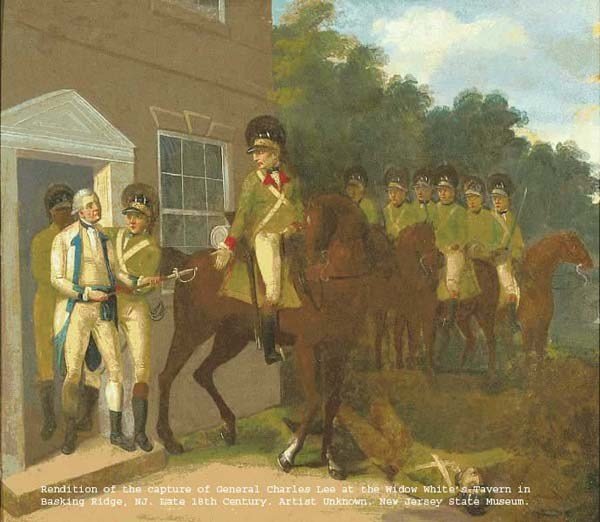
This is a story about a widow, a General, and a War for Independence. For over a decade, I’ve been researching the story behind the 1776 capture of one of General Washington’s head generals, but I never really focused on the person who owned the tavern where he was captured. Time to find out more about Mary, her life, her tavern, and her ties to Basking Ridge, including that December 13, 1776, morning that changed the War and American History forever.
There have long been conflicting stories about why General Charles Lee was even at Widow White’s Tavern on that morning of December 13, 1776 when he was captured by the British. Some writers and historians have suggested he may have been there to see Widow White herself, while others note that he had been invited. Some say he was coming to have breakfast with John Morton, the Rebel Banker. Others say to meet General William Alexander (Lord Stirling). Some say it wasn’t ever about a woman, as there are even accounts that Lee was uncomfortable around women and may have preferred the company of men.
Researching history often means sorting through many versions of the same event. As we looked closely at what happened to General Lee on the morning of December 13, 1776, the moment that changed the course of the Revolutionary War, the same questions kept returning. Why was Lee off camp? How did the British know where he was? And how did they manage to surprise him so easily? The stories vary, but since Lee left no entry in his diary about that morning, the British account remains the most reliable record.
Then there was widow Mary White. Some historians have suggested a more personal angle. Was General Lee at the tavern because he was lonely? Was he seeking a bit of companionship before riding on to Lord Stirling’s house, which was nearby? What becomes clear in so many Continental Army stories from this region is that there was always a tavern involved. During the winter encampments in Morristown, soldiers often slipped over to the tavern in Bernardsville. If not there, they ended up at Widow White’s. And if they were heading south, they stopped at Bullion’s Tavern on the road to Somerville. The taverns were essential waypoints, gathering spots, and lifelines during the war.
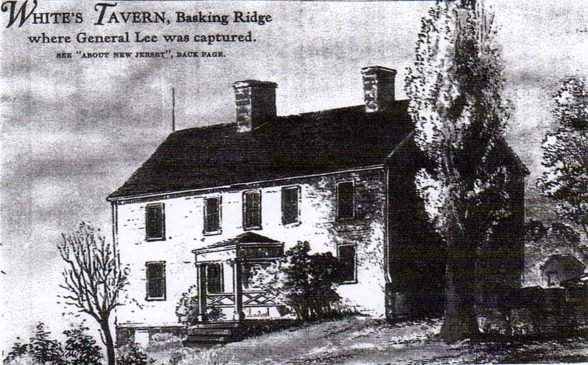
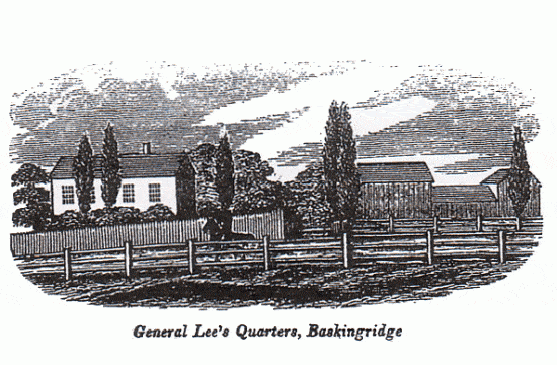
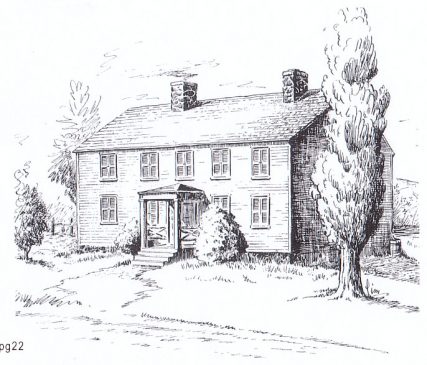
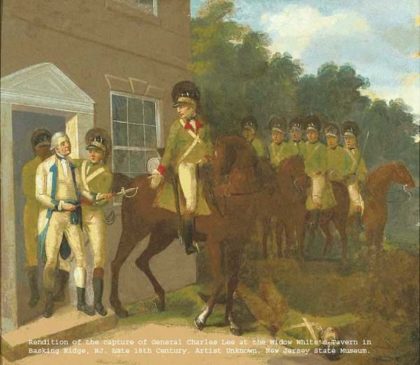
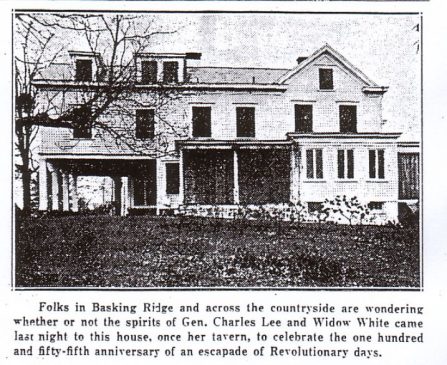
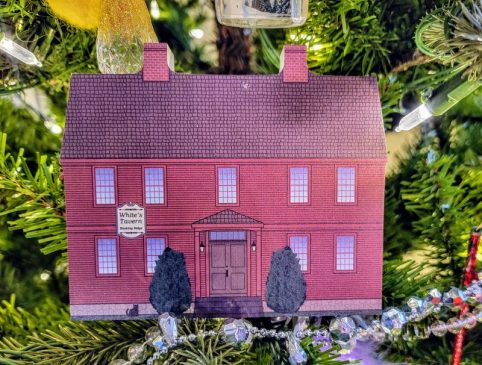
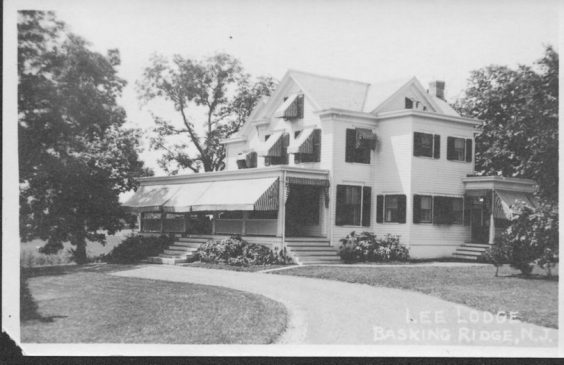
From her home, the front of which had once served as a tavern called the Brewster Tavern, Mary presided over what became one of the most famous moments in early American history. On the morning of December 13, 1776, British dragoons stormed the tavern and captured Continental Army General Charles Lee. The dramatic episode forever attached her name to the event, and the story spread throughout the colonies.
So before we return to that dramatic December morning, we need to understand who Widow White and General Charles Lee really were.
Mary Jarvis – Mary Whitaker – Mary Brown – Mary White
Mary’s story begins with her parents, Jonathan Whitaker and Elizabeth Phoebe Jarvis, both members of early families that helped shape the small community around the Basking Ridge crossroads. Mary Whitaker was actually Mary Jervis or Jarvis, the stepdaughter of Jonathan Whitaker and the natural daughter of Elizabeth Phoebe Jervis, who had previously been married to Eliphalet Jarvis (Jervis) from Long Island. She also had a brother, Nathaniel.
Their household stood within the growing Presbyterian settlement, surrounded by farms, taverns, and the meeting house that formed the center of village life. The Whitakers raised several children, including Mary and her sister Elizabeth, who later married Stephen Ogden and lived directly across the road from Whites Tavern.
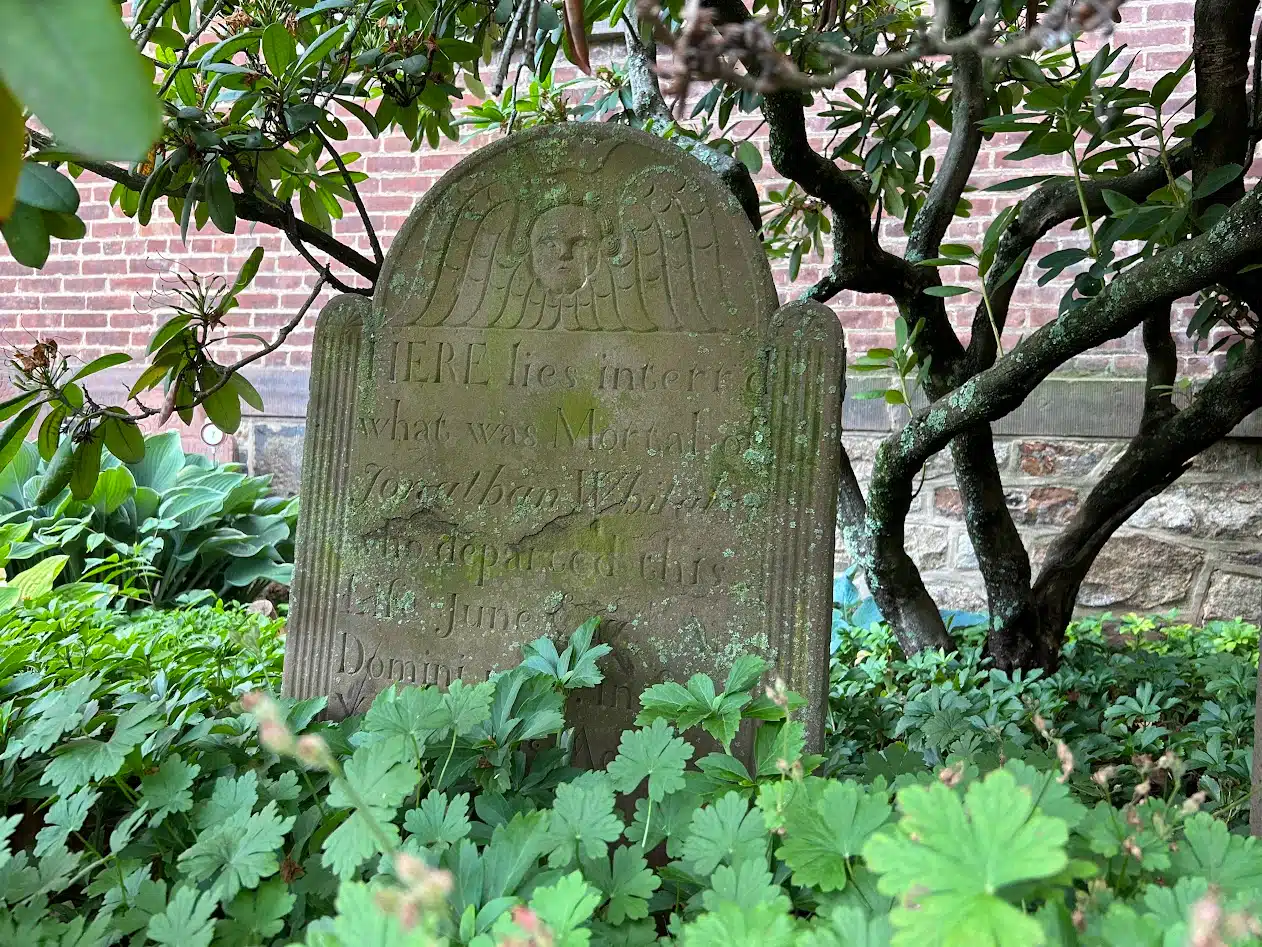
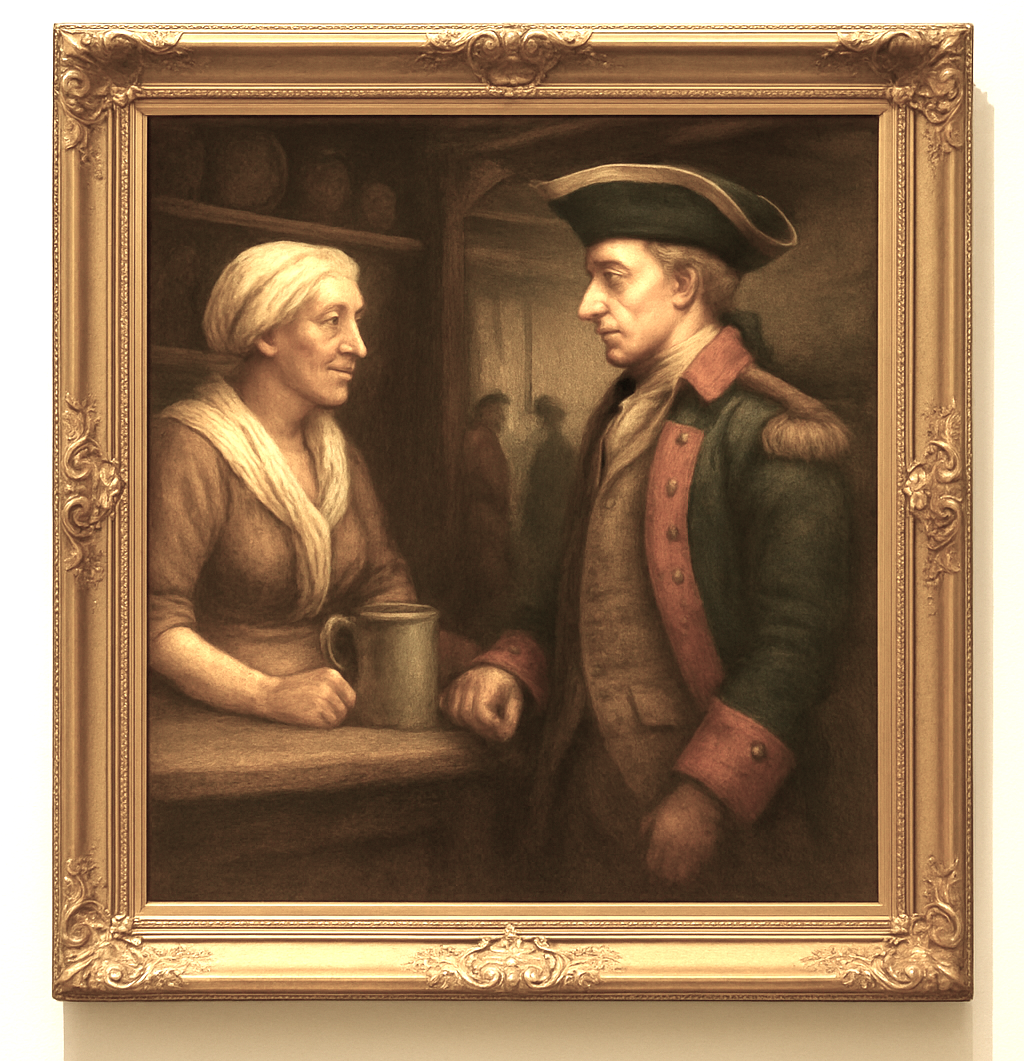
Mary Jarvis Whitaker Brown White, remembered in local history as Widow White, lived a remarkable and quietly influential life in eighteenth-century Basking Ridge. Born around 1719, Mary first married Samuel Brown, who owned a large farm and homestead on the road leading through the village. When Brown died in 1763, Mary inherited the use and profit of the property. She later married Ebenezer White, and after his death, she became known throughout the area simply as Widow White.
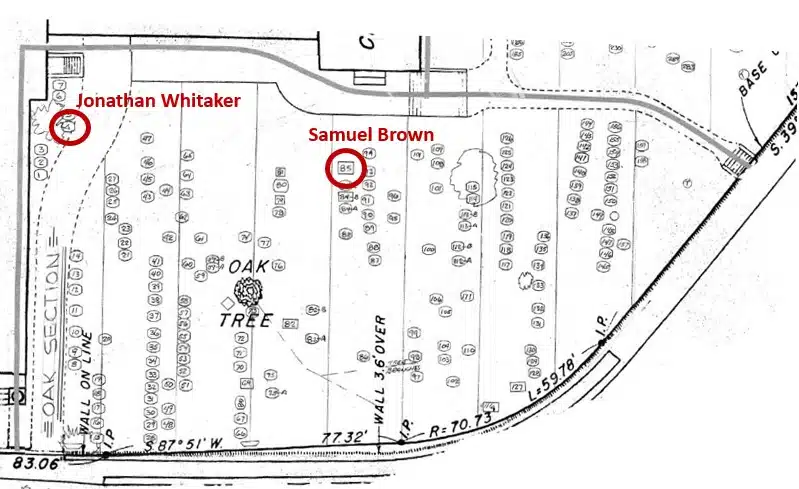
Samuel Brown was Mary’s first husband and the original owner of the Basking Ridge farm that would later gain fame during the Revolutionary War. Born in 1712, Brown built his life around the one hundred six-acre property that fronted the main road through the village. He died in 1763, leaving Mary the use and profit of the house, outbuildings, and farmland. This inheritance placed her in an unusual position of independence for a woman of the period. Brown’s estate became the foundation for everything that followed, including the small tavern activity that seems to have taken place on the property even before the Revolution intensified.

Here lies the body of
Mr Samuel Brown
We trust he rests above the skies
Tho moldering here among us lies
His leaving this frail world doth shew
A soul alive, sincere and true
A useful Elder in this Church
A friend sincere a neighbor kind
Who for ye Public did so much.
There are so many interesting epitaphs here, it would be impossible to quote them all, but we would like to give you just one, of Samuel Brown (1712-1763) to whom we are indebted for the first legacy, of 200 pounds – bequeathed to our church:
“Is Brown deceased? Yes he is fled We trust he’s ris’n above the sky Tho’ mould’ring here among ye dead His sleeping dust interred doth lie. A pious man and Husband kind An useful Elder in this church A Friend sincere of generous mind Who for ye Publick had done much.” (Source: History of the BRPC)
After Samuel Brown’s death, Mary married Ebenezer White, a respected local figure whose family name soon became associated with the property. Ebenezer lived at the homestead with Mary. Ebenezer and Mary had a daughter, Susan White, who later married her cousin Stephen Whitaker, son of Jonathan Whitaker Jr (Mary’s brother). Ebenezer (Edwin) White died around 1775. After he passed, Mary is believed to have spent a brief period with family (Jervis) on Long Island before returning to Basking Ridge, where she resumed life in the familiar house that would later be remembered as Widow Whites Tavern.
Mary became known throughout the region simply as Widow White, a title that would become permanently linked to the tavern and the famous capture of General Charles Lee on December 13, 1776. Though Ebenezer died before the dramatic event, his surname endured as part of the location’s identity and helped define the site’s legacy in Basking Ridge’s history.
A Trist, or a Twist
One small but interesting detail often overlooked in the tale of General Lee’s capture is the age difference between the two central figures. On that December morning in 1776, Charles Lee was 44 years old, while Mary White was about 57 (13 years younger). A man arriving at the home of a woman thirteen years his senior was unusual for the time, yet not unheard of, and it adds a subtle human note to an otherwise dramatic Revolutionary War moment. It reminds us that history often unfolds in everyday places, among people whose lives, ages, and relationships were far more familiar than we might expect.
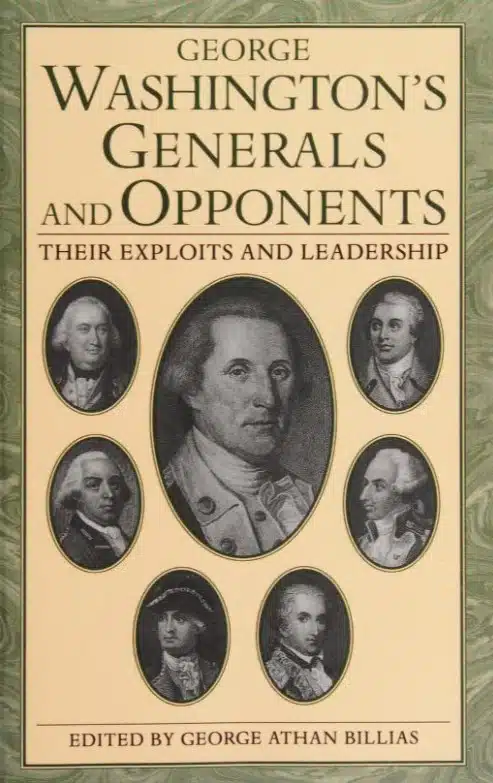
There have been conflicting rumors as to why General Lee was even at the Widow White’s Tavern. Some writers have suggested he was there perhaps to see Widow White herself, while other accounts note that he was actually invited. There are also accounts that perhaps General Lee was not even comfortable around women and might have been homosexual, as was stated in George Washington’s Generals and Opponents by George Athan Billias. Books that mention General Charles Lee and possible homosexuality mostly treat it as speculation, not fact.
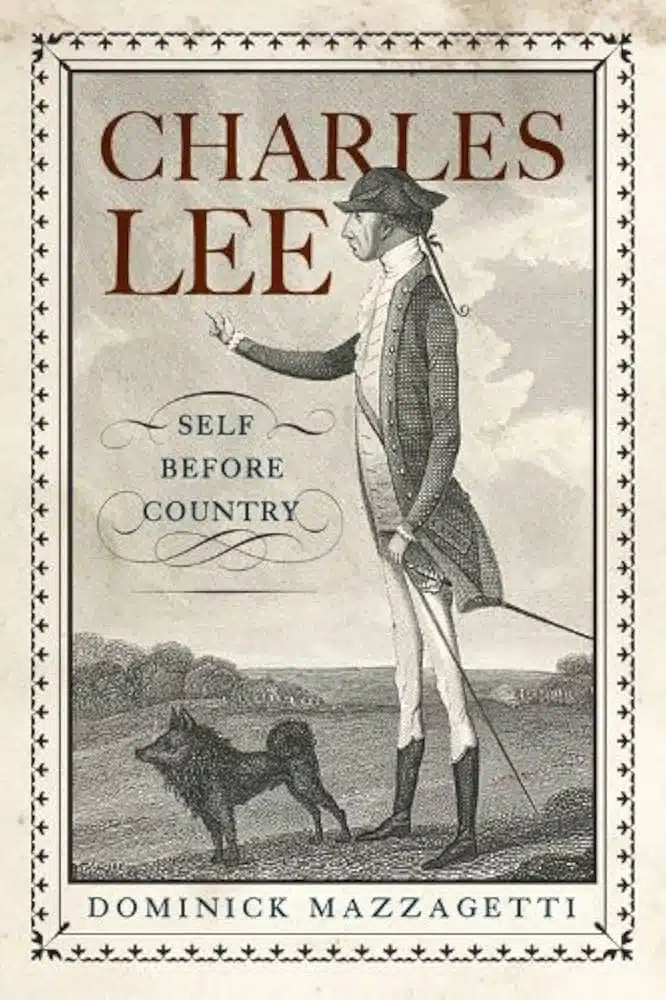
Some other summaries and reference works repeat that there were “hints” of homosexual tendencies, usually pointing to Lee’s lack of known long-term relationships with women and his preference for the company of his dogs and male companions. Researching the American Revolution, these writers sometimes describe him as eccentric, prickly in social situations, and more at ease in all-male military circles, and from that, they float the idea that he may have been homosexual. More recent biographers tend to be more cautious. Dominick Mazzagetti, in Charles Lee: Self Before Country, notes that Lee’s surviving letters actually show interest in women and do not provide clear evidence of same sex relationships. Not saying he was, but some say they speculated he was.
Lore also has it that on the morning of the assault on December 13, 1776, some of Lee’s guards were killed outside the tavern during the capture and possibly buried across the street in Mary White’s sister’s yard. (See Bernardsville Times article in 1902), Also stated in (Voorhees’ piece as follows: “An officer in a letter dated December 21, 1776, stated that when Colonel Harcourt approached the house with his men, they received gunfire from a guard that was in the outhouse, and that two sentinels were killed. Another account says seven or eight were killed, without any loss on our side.
Final Chapter
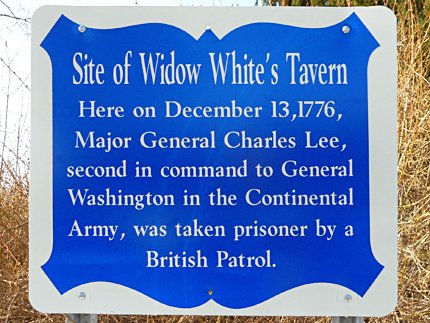
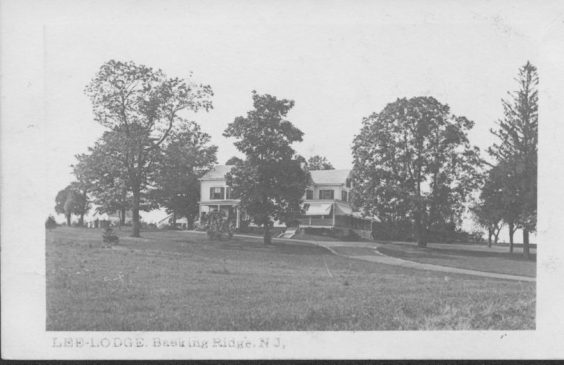
Mary remained the owner of the tavern, the home, and the property until her death in May 1794. In her will, she directed that the house and farm be sold, marking the final chapter of her long stewardship of the site. Although the original structure is long gone, a historic marker now stands near the location, reminding visitors that a quiet widow once played an unexpected role in the Revolutionary War and in the history of Basking Ridge. Her death ended more than three decades of ownership and care for the property that would forever carry her name. Yet unlike her husbands, no marked grave for her survives. Her name does not appear in the recorded burials of the Basking Ridge Presbyterian Church, even though many of her neighbors and family members are buried there under the old stones. If you read her will, you can see her family connections to other originating Basking Ridge families, including ties to the families Cross, Alward, Lewis, Whitaker, and, I’m sure, others.
The most reasonable conclusion is that she was laid to rest in the same churchyard, either with a simple field marker that vanished long ago or with a stone that never endured the weather of two centuries. A faint suggestion exists that she may have returned to Long Island late in life, but no primary record supports that idea. In the end, her exact resting place remains unknown, a quiet mystery that contrasts with the dramatic Revolutionary War moment that made her home famous.
Mary White’s Last Will and Testament
Will Summary
Mary White of Bernards Township, then in good health and sound mind, wrote her last will on May 28, 1794. She directed that her funeral be simple, without the serving of liquor, and that all debts be paid promptly from her personal estate. Mary White made several specific gifts, mostly to members of the Cross, Alward, and Whitaker families.
Mary Cross, wife of William Cross: She receives most of Mary White’s personal belongings for her lifetime use, including furniture, bedding, clothing, curtains, kitchenware, and household goods. These items cannot be sold and must be passed to Mary Alward, Mary White’s daughter, and to the children of Phebe Cross after her death.
- Mary Alward, wife of William Alward: She receives a large looking glass, bed and bedding, a mahogany table, sheets, a quilt, half of the kitchen furniture, and £25 in money. These items are for her lifetime and then go to her two daughters.
- Sarah, daughter of Mary Cross: She receives a feather bed, sheets, blankets, and all remaining notes owed to Mary White, to be collected on her behalf.
- Samuel Brown Cross: He receives a feather bed, bedding, and additional notes and debts owed to Mary White.
- Mary White’s brother, Rev Nathaniel Whitaker, and his son Nathaniel of Bernards Township are to divide the remainder of the estate equally.
- Mary also directs that a portion of the proceeds from the future sale of her home, as required by the will of her late husband, Samuel Brown, be distributed as follows:
- £50 to Jonathan Whitaker, son of Rev Nathaniel Whitaker, Fifty pounds to Rev Whitaker’s heirs, to be used for the benefit of Mary, the wife of William Cross, at £10 per year during her life
- Mary grants Eliphalet Jervis Cross the benefit of a mortgage bond for £235, with £10 interest. The interest is for his support, and the principal must remain intact for 21 years unless he dies earlier, in which case the bond returns to the executors.
Mary appointed Jonas Ogden of Morristown and Rev Nathaniel Whitaker were the executors of her estate. They were responsible for carrying out all provisions of the will. The will was signed by Mary White and witnessed by Ruth Haines, Phebe Lewis, and Phebe Haines.








Our Widow White’s Research Series
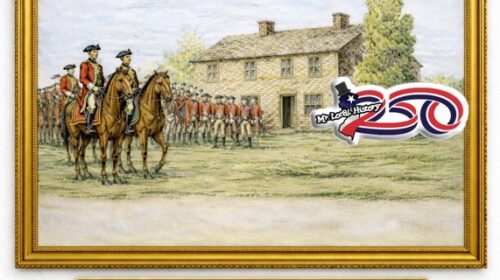
What Might Have Happened if General Lee Wasn’t Captured in Basking Ridge
Views: 403 In December 1776 the American rebellion was close to collapse. The Continental Army was shrinking as enlistments expired and morale sank to its lowest point of the war. British forces held New York and expected the uprising to…
Insights: General Charles Lee’s Capture at Widow White’s Tavern in Basking Ridge & Washington’s Delaware Crossing Impact
Views: 2,014 December 13, 1776, stands as the most electrifying day in Basking Ridge’s history, when the sleepy colonial crossroads suddenly became the center of the Revolution. At dawn, the infamous capture of General Charles Lee sent shockwaves through Washington’s…
Widow White’s Tavern Series – A Basking Ridge American History Moment
Views: 569 December 13, 1776, stands as the most electrifying day in Basking Ridge’s history, when the sleepy colonial crossroads suddenly became the center of the Revolution. At dawn, the infamous capture of General Charles Lee sent shockwaves through Washington’s…
December 13, 1776 – Basking Ridge , New Jersey Altered American History
Views: 9,183 The world might have had a different look if it weren’t for this day’s event.December 13, 1776 in Basking Ridge, New Jersey. Basking Ridge, New Jersey’s most famous incident, occurred on December 13, 1776, at about noon. General…
New Jersey Rev War Series Mr. Local History Project
Views: 11,236 New Jersey is known as the “Cockpit of the American Revolution” for a reason – because it was. More battles, more encampments, more strategies took place in New Jersey than in any other colony of the original thirteen.…
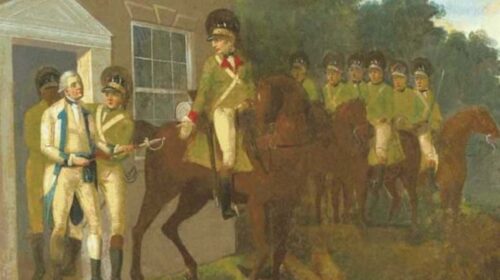
Widow White’s Tavern in Basking Ridge was More Than a Grog Stop
Views: 27,661 Basking Ridge, New Jersey’s Most Famous Incident Yes, this historic event made the series, so look for it. The episode covering that timeframe is Episode 3: “The Times That Try Men’s Souls (July 1776 – January 1777)” about…
Three Historic Moments That Changed Basking Ridge & America
Views: 12,371 On the internet, we’ve created the #3LOCALHISTORYEVENTCHALLENGE, where you share your town’s three most historic events. As the historian for Bernards Township, representing Bernards Towns#hip and its four hamlets is a great honor. We’re always looking for ways…
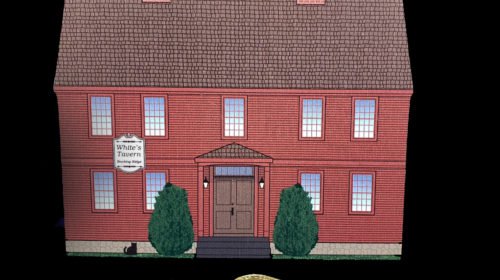
Widow White’s Tavern 7th Wooden Historic Village Keepsake
Views: 6,376 Be part of the Widow White’s Tavern limited edition run. Mr Local History is proud to announce the release of the 7th in the collectible series, the infamous 1776 Widow White’s Tavern in the village of Basking Ridge.…
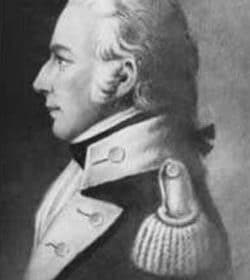
John Morton – General Washington’s Rebel Banker Stashed in Basking Ridge
Views: 7,479 John Morton was a Colonel in the Continental Army. Still, he relinquished his commission in 1761 to become a highly successful merchant, specializing in the trade of flax from his native Ulster in Northern Ireland, thereby supporting the…

What Happened to Mary White and Widow White’s Tavern – Research Notepad
Views: 27,426 Below are the original research notes as I had spent years researching contradicting information on the Widow White’s Tavern in Basking Ridge, New Jersey. Often I like to post research in hopes that other researchers can see what’s…