Basking Ridge, New Jersey’s Most Famous Incident

Yes, this historic event made the series, so look for it. The episode covering that timeframe is Episode 3: “The Times That Try Men’s Souls (July 1776 – January 1777)” about 1 hour 30 minutes in.
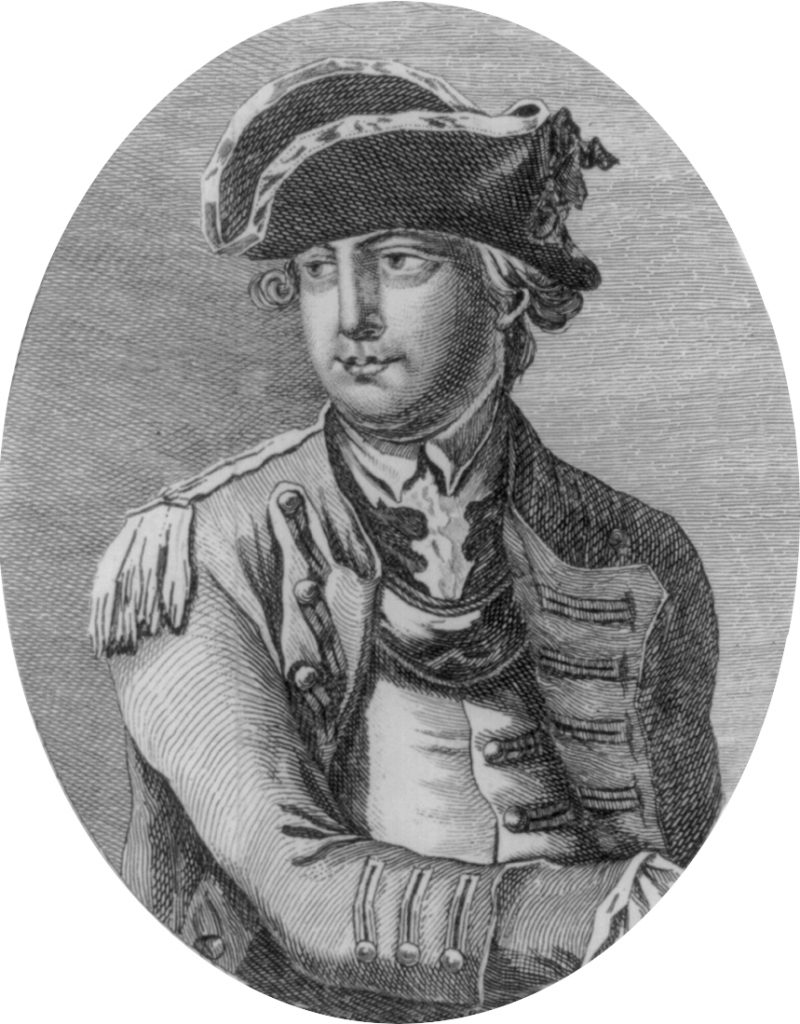
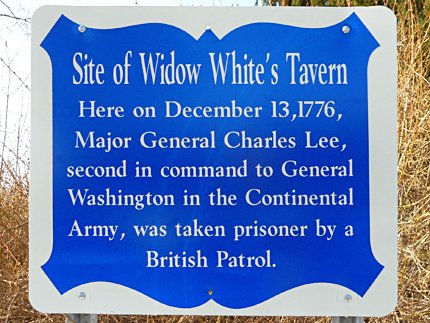
At about noon on December 13, 1776, General Charles Lee (1731-1782) was alarmed by Major Wilkinson while he was writing a letter to General Gates about George Washington in an upstairs bedroom of the Widow White’s Tavern in the quiet village of Basking Ridge, New Jersey.
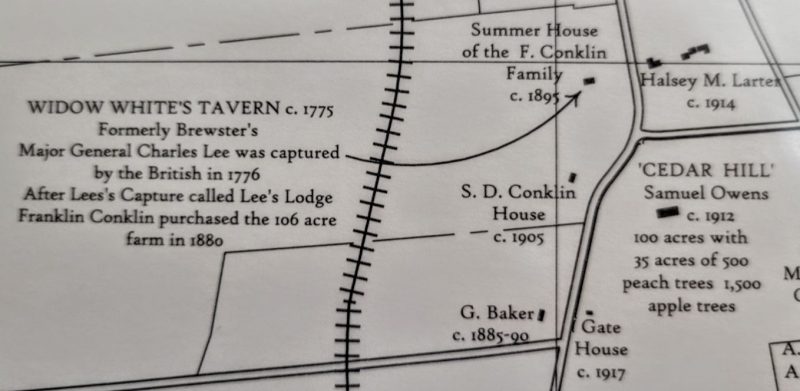
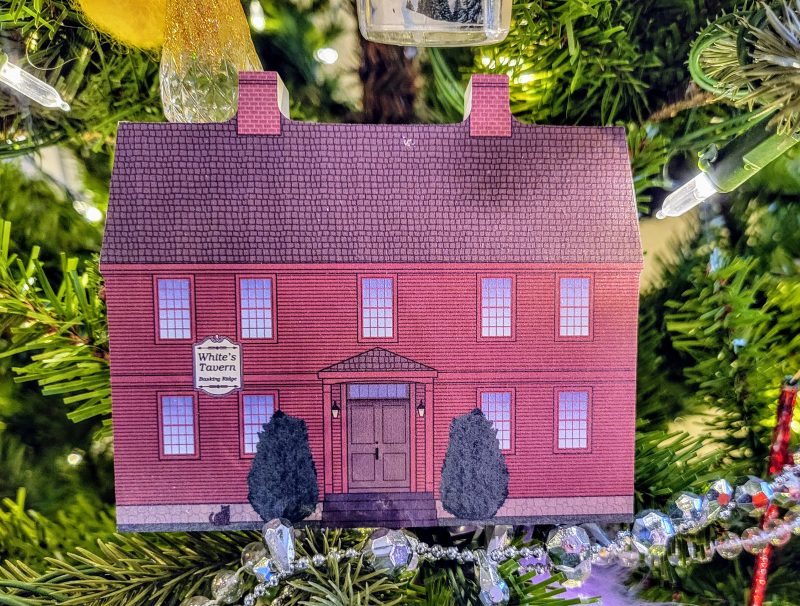
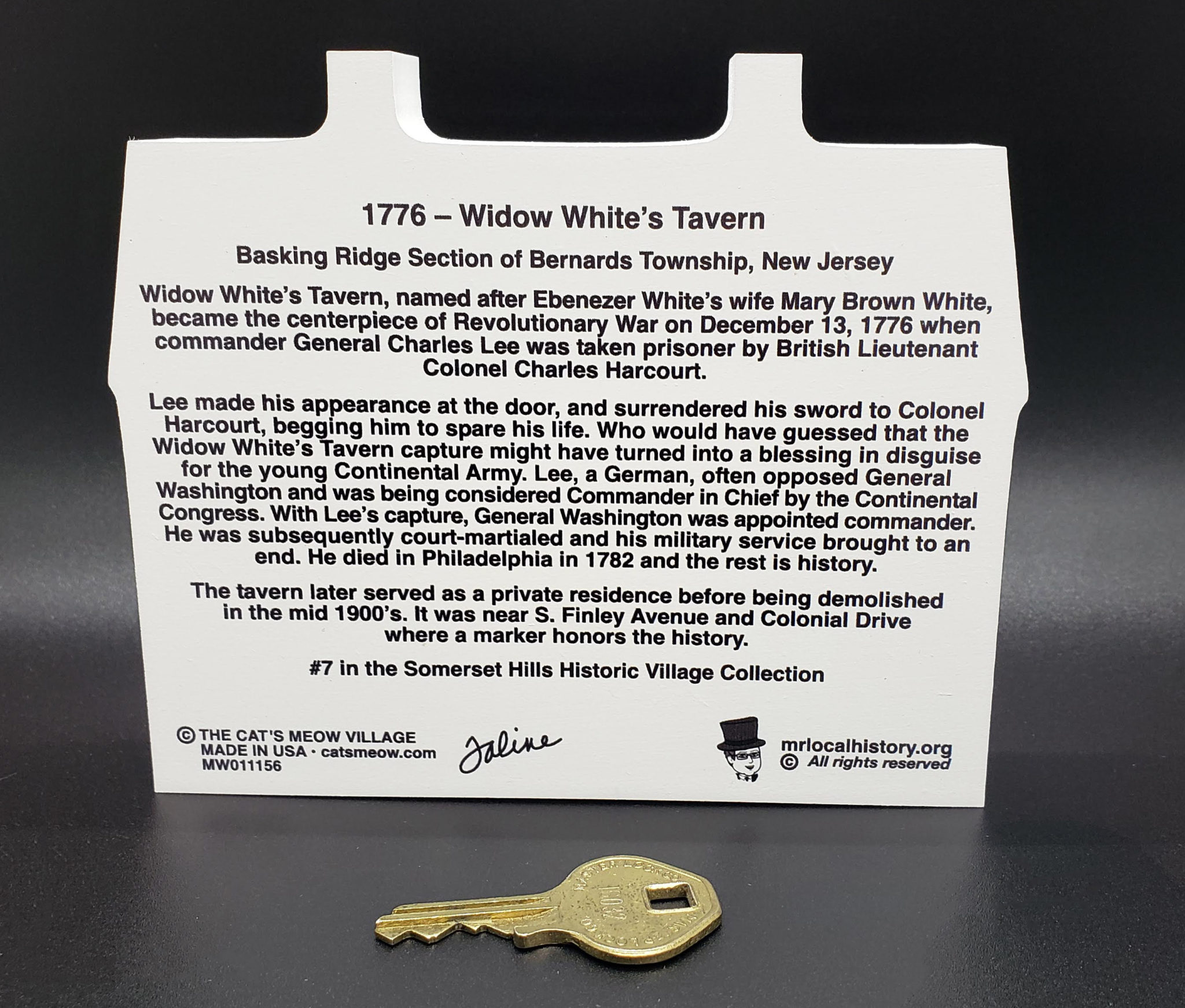
Widow White’s Tavern, named after Ebenezer White’s wife, Mary Brown White, became the centerpiece of Revolutionary War history on that day because it was on this most unfortunate day for General Lee that General Lee became a prisoner of the British Army, leaving General Washington in a precarious position. Who would have guessed that the Widow White’s Tavern capture might have turned into a blessing in disguise for the young Continental Army?
With Lord Cornwallis staying in Pennington to the South, he sent a patrol of 30 dragoons from the Sixteenth Regiment (Burgoyne’s Regiment of Queen’s Light Dragoons), to gain intelligence of Lee’s division. Lieutenant-Colonel Harcourt (later Earl Harcourt, F.M.) obtained intelligence that Lee was in Basking Ridge and proceeded in that direction.
Surprisingly, Lee’s Guard, the Tavern was surrounded. Major William Bradford, one of Lee’s aids, who was present and escaped, stated that the event unfolded by a Tory who was with General Lee the night before, complaining of a horse that was recently taken by the Army. He found where the General was to lodge and breakfast, and knew it as to be at White’s Tavern about noon. He left them, rode 18 miles South to Brunswick, and returned with Harcourt and the Dragoons.
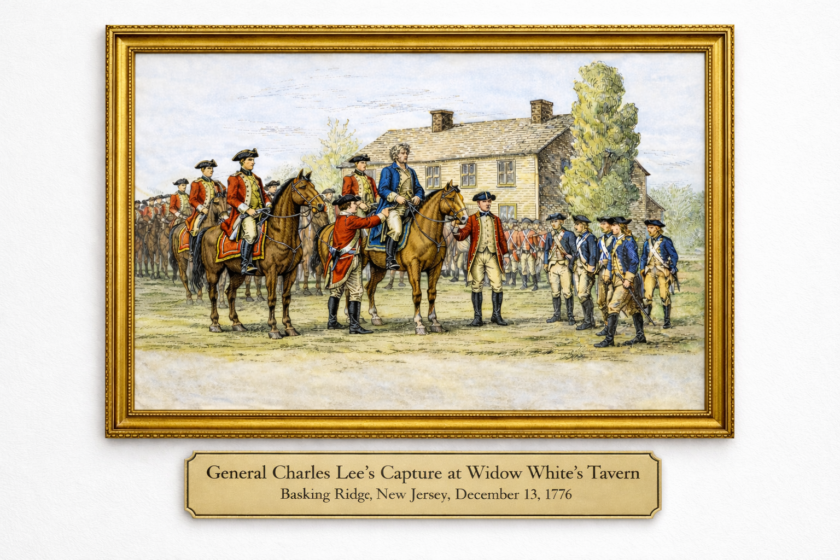
British Account of the Event
The English version of the event tells a dramatic tale. British troops claimed they intercepted a messenger carrying a letter from General Charles Lee. Under pressure, the messenger revealed Lee’s location. Acting quickly, Lieutenant Colonel Charles Harcourt ordered Banastre Tarleton to ride ahead to Widow White’s Tavern. Tarleton and six men rushed the building, blocking the doors, while Harcourt followed close behind.
Harcourt then demanded Lee’s surrender, threatening to set the tavern ablaze and put every man inside to the sword. The British were met with gunfire from within, and several of Harcourt’s light horsemen fell, including a Cornet. Inside the tavern were several French officers accompanying Lee. One even raised his weapon to take aim at Harcourt himself.
Lee’s guard, carelessly posted at an outbuilding, had been caught completely off balance. The sentry at the tavern door initially mistook the British dragoons for friendly troops. Once the alarm sounded, the guard tried to rally and mount a defense, but they were overwhelmed almost immediately. Several were wounded. Two were killed attempting to flee. Years later, accounts still discussed the bravery of Captain Jean Louis de Virnejoux, a French officer who insisted that, had his advice been followed, Lee might well have escaped.
The resistance did not last long. Realizing hiding was impossible and further struggle hopeless, General Lee finally emerged from the tavern. English accounts say he stepped out in a submissive posture, surrendered his sword to Harcourt, and begged that his life be spared. British Captain Thomas Harris later wrote that Lee behaved “as cowardly in this affair as he had dishonorably in every other,” claiming Lee even fell to his knees in front of Harcourt.
The British certainly did not pamper their captive. Lee was roughly seized and refused even a moment to retrieve his hat or coat. He was tied hand and foot onto a guide’s horse, while one of his aides was placed behind a dragoon, and the group was rushed off at a furious pace toward New Brunswick. Hours into the ride, Lee’s spirits collapsed. Acknowledging both the weakness of the American army and his own belief in British resolve once roused, he told his captors, “The game is nearly at an end.”
Thus, General Charles Lee, one of General Washington’s original twelve generals, was taken prisoner and delivered to the camp of Lord Cornwallis in New Brunswick. Widow White’s Tavern, the unlikely stage for this dramatic moment in the American Revolution, once stood near the corner of South Finley Avenue and Colonial Drive in Basking Ridge, set back a short distance from the road.
What Became of the Widow White’s Tavern
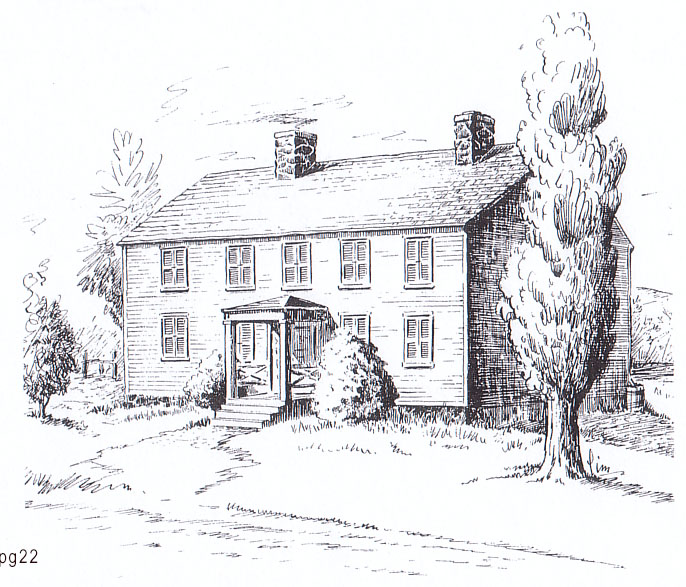
Brewster’s Tavern
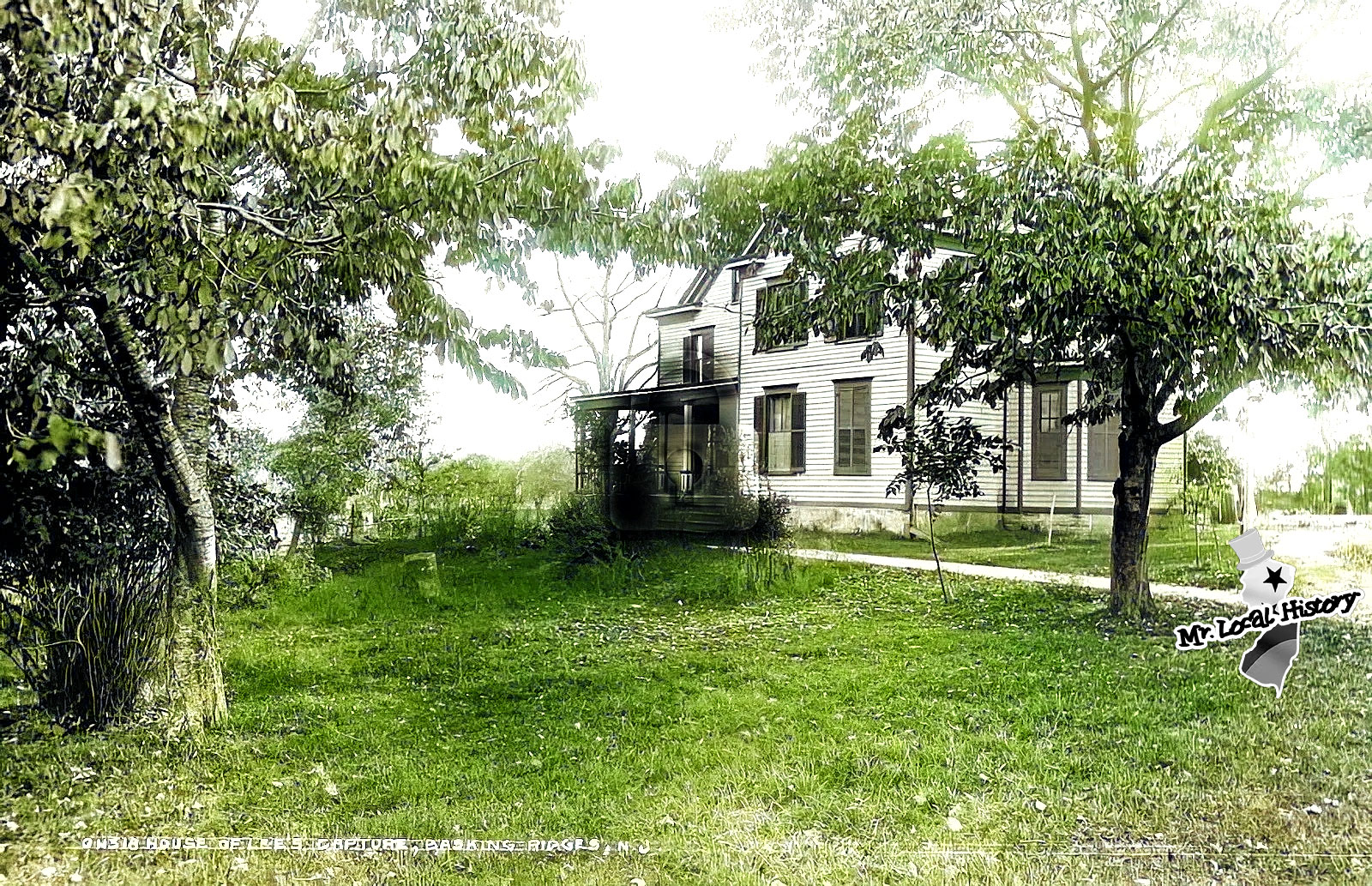
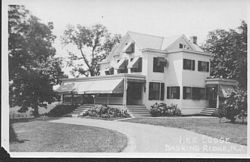
Lee Estate
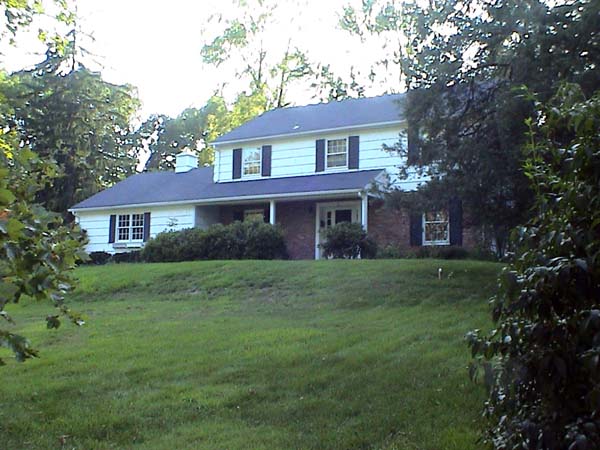
Murphy House
The Uneven Prisoner Exchange
As a British prisioner, he gave Gen. William Howe a plan for defeating the Americans, but his treason was not discovered. Ultimately, General Lee was exchanged (May 9, 1778) back to the Continental Army for British Maj. General Richard Prescott and General Washington restored his command at Valley Forge.
At the Battle of Monmouth, he received a rebuke from General Washington and was subsequently brought up on three charges, for which Lee requested a court-martial. He lost the court-martial and was officially dismissed from the Continental Army.
Presiding over the Court Martial hearings was no other than Basking Ridge’s own Major General Lord Stirling (William Alexander). He was convicted and removed Lee from his position and the Army in disgrace. Lee tried to get Congress to overturn the court-martial verdict, and when this failed, he resorted to open attacks on Washington’s character. Lee’s popularity plummeted. Colonel John Laurens, an aide to Washington, challenged him to a duel, in which Lee was wounded in the side. He was released from duty on January 10, 1780.
In an ensuing encounter, Lee was slightly wounded in the initial exchange of shots and only the intercession of Laurens’ second, Alexander Hamilton, prevented further engagement. Lee’s injury, however, prevented him from accepting a similar challenge from Anthony Wayne.
My Dr. Gates: The ingenious maneuver of Fort Washington has unhinged the goodly fabrick we had been building- there never was so damned a stroke- entre nous, a certain great man is most damnably deficient. He has thrown me into a situation where I have my choices of difficulties. If I stay in this Province I risk myself and army, and if I do not stay the Province is lost forever. I have neither guard, cavalry, medicines, money, shoes, or stockings. I must act with the greatest circumspection. Tories are in my front, rear and on my flanks. The amass of the people is strangely contaminated- in sort unless something which I do not expect turns up we ar lost. Our counsels have been weak to the last degree. As to what relates to yourself in you think you can be in time to aid the General I would have you by all means go. You will at least save your army. It is said the Whigs are determined to set fire to Philadelphia. If they strike this decisive stroke the day will be our own, but unless it is done all chance of liberty in any part of the Globe is forever vanished. Adieu, my dear friend. God bless. you .Charles Lee.”
The General Lee Letter that he was writing to General Gates, on the morning of his capture…
“What a lesson of caution is to be derived from this event, and how important the admonition furnished by it! What an evidence of the caprice of fortune, of the fallibility of ambitious projects, and the inscrutable ways of Heaven! The capture of General Lee was felt as a public calamity; it cast a gloom over the country, and excited general sorrow. This sympathy was honorable to the people, and due to the stranger who had embarked his fortune with theirs, and determined to share their fate, under circumstances of more than common peril. Although this misfortune deprived the country of its most experienced chief, I have ever considered the deprivation of a public blessing, ministered by the hand of Providence; for if General Lee had not abandoned caution for convenience, and taken quarters two miles from his army, on his exposed flank, he would have been safe; if a domestic traitor, who passed his quarters the same morning on private business, had not casually fallen in with Colonel Harcourt, on a reconnoitering party, the General’s quarters would not have been discovered; if my visit and the controversy with the Connecticut Light-horse had not spun out the morning unseasonably, the General would have been at his camp; if Colonel Harcourt had arrived an hour sooner, he would have found the guard under arms, and would have been repulsed, or resisted until succor could have arrived; if he had arrived half an hour later the General would have been with his corps; if the guard had paid ordinary attention to their duty, and had not abandoned their arms, the General’s quarters would have been defended; or if he had obeyed the peremptory and reiterated orders of General Washington, he would have been beyond the reach of the enemy. And shall we impute to blind chance such a chain of rare incidents? I conscientiously reply in the negative; because the combination was too intricate and perplexed for accidental causes, or the agency of man. It must have been destined.”
General Wilkinson wrote in his later memoirs
(about General Lee and the December 13th morning in Basking Ridge)
As a captive, he gave Gen. William Howe a plan to defeat the Americans, but his treason went undetected. Ultimately, General Lee was exchanged (May 9, 1778) back to the Continental Army for British Maj. General Richard Prescott and General Washington restored his command at Valley Forge. At the Battle of Monmouth, he received a rebuke from General Washington and was subsequently brought up on three charges, for which Lee requested a court-martial. He lost the court-martial and was officially dismissed from the Continental Army.
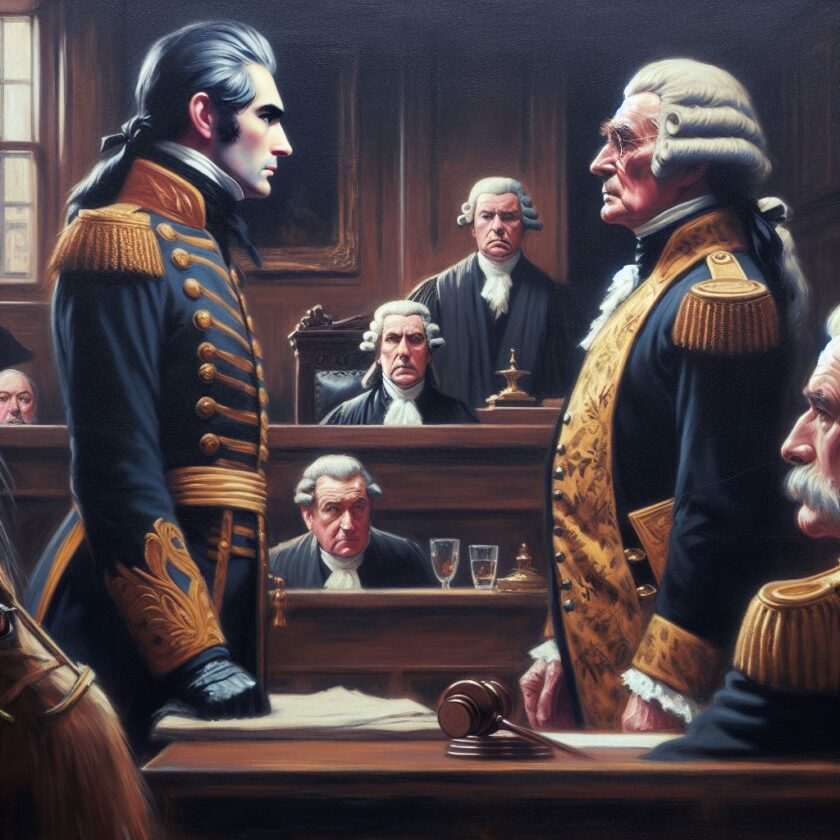
Presiding over the Court Martial hearings was no other than Basking Ridge’s own Major General Lord Stirling (William Alexander). He was convicted and removed Lee from his position and the Army in disgrace. Lee tried to get Congress to overturn the court-martial verdict, and when this failed, he resorted to open attacks on Washington’s character. Lee’s popularity plummeted. Colonel John Laurens, an aide to Washington, challenged him to a duel in which Lee was wounded in the side. He was released from duty on January 10, 1780.
In an ensuing encounter, Lee was slightly wounded in the initial exchange of shots, and only the intercession of Laurens’ second, Alexander Hamilton, prevented further engagement. Lee’s injury, however, prevented him from accepting a similar challenge from Anthony Wayne. On January 10, 1780, Lee left his Virginia estate to visit Philadelphia he was stricken with fever and died alone and friendless at a tavern on October 2, 1782.
The former General Lee died a few years later on October 2, 1782, as Lee wrote before he died in his will:
“I desire most earnestly that I may not be buried in any church yard, or within a mile of any Presbyterian or Anabaptist meeting house; for since I reside in this country I have kept so much bad company when living, that I do not choose to continue it when dead.”
General Lee prior to his death
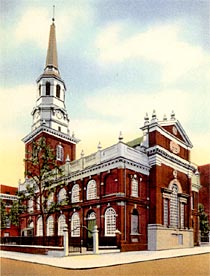
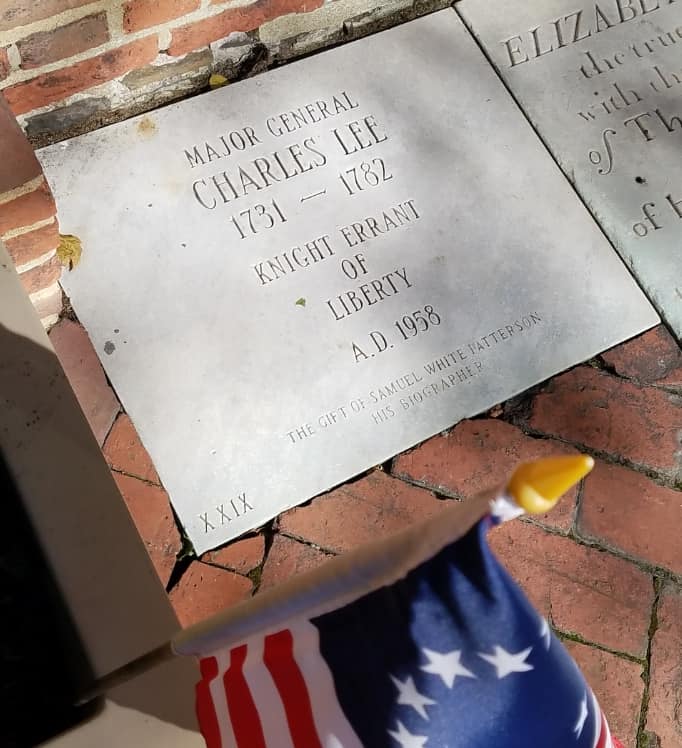
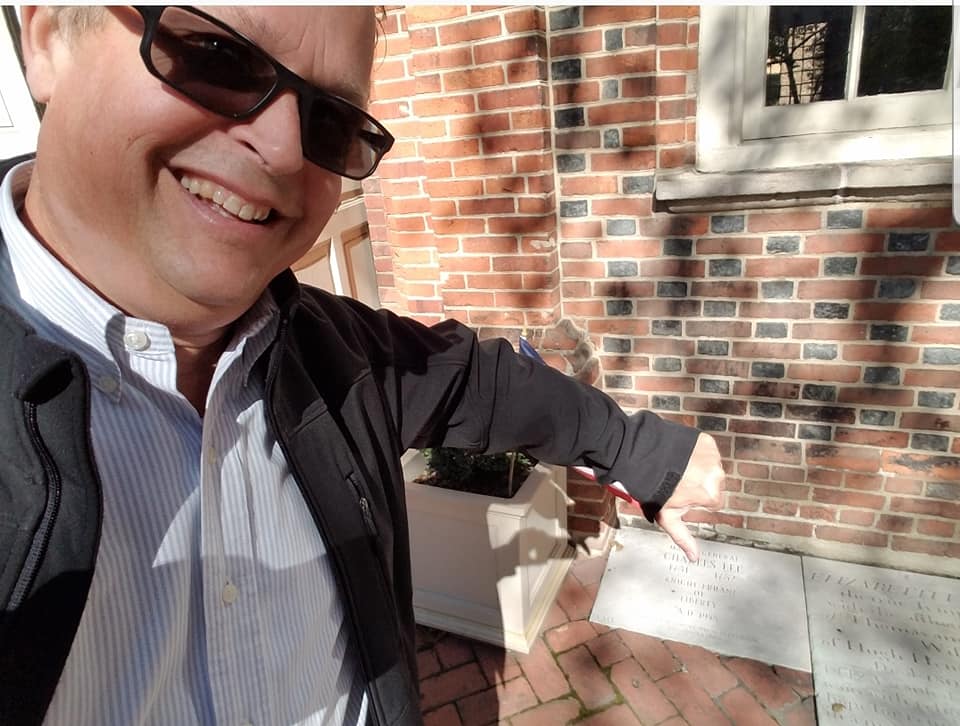
Lee was, however, buried in the cemetery of Christ Church in Philadelphia (Arch Street and 5th Street), and George Washington and other dignitaries attended the inscription “Knight Errant of Liberty” and his funeral.
Reference People/Articles Supporting Research
Lee Papers – The biography of Charles Lee has not yet been properly written. Edward Langworthy edited his essays and miscellaneous papers, with an interesting biographical sketch, under the title “Memoirs of the late Charles Lee, Esq.” (London, 1792). The sketch by Jared Sparks (“American Biography,” 2d series, viii., Boston, 1846) is carefully written. Still, it has little value today because the author knew nothing of that treasonable correspondence with Howe, which modifies our view of Lee’s career in America. George H. Moore announced in 1860 a biography and collection of essays, with documents never before published, but this much-needed book has not yet appeared. Dr. Moore’s monograph cited above contains much information not easily found elsewhere; the portrait, which stands as its frontispiece, is reduced from the folio print published in London during the Revolutionary War.
- Memoirs of General James Wilkinson mention that General Lee arrived at approximately 4 am at White’s Tavern on December 13, 1776 ( Rev. Oscar Voorhees, a descendant of Jonathan Whitaker, 1935)
- Wilkinson woke General Lee at 8 a.m. to discuss a letter from Gen. Gates and went down for breakfast at about 10 a.m.
- It was noted that General Lee was supposed to have breakfast on the morning of December 13, 1776, at John Morton’s house up the street. He never arrived. When Morton sent someone to look, the British wounded that person.
- The “Lee Papers 1754-1811
- General Lee’s historical timeline
- Letters between General Washington and General Lee
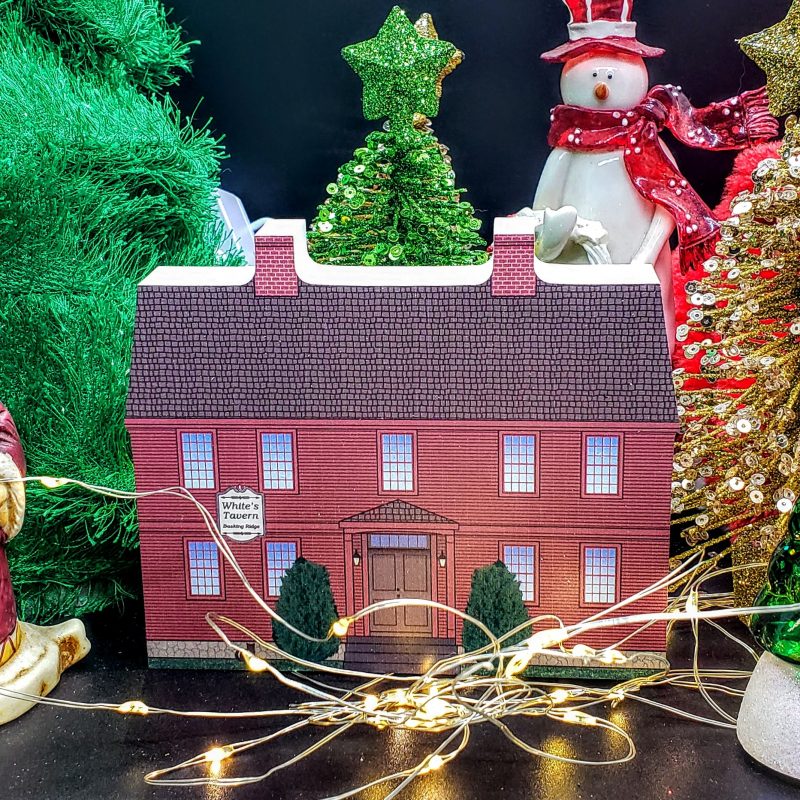
Show off one of the greatest stories in Basking Ridge History
| Article: | Date | Author | Description |
| Lee Papers | 1873 | By Charles Lee, Henry Edward Bunbury | Entitled the “Lee Papers” An extract. The basis of the whole collection has been the mass of original papers left by General Lee to William Goddard, and still preserved in his family.”- |
| Amazon Books | 1860 | MOORE, George H. | MOORE, George H. Treason of Charles Lee, Major General, Second in Command in the MOORE, George H. The Treason of Charles Lee, Major General, Second in Command in the American Army of the Revolution. N.Y., 1860. 1st ed. Illus. with portrs. and folding facs. xii, 115pp. |
| 1887 | Dr William Pennington | Paper documents historical ownership of Widow Whites Tavern (Bernardsville Spinning Files) | |
| Visit Bernards Twp Library | J.H. Van Horn | Historic Somerset- Articles of the times (Bernards Historical Room 974.914) | |
| Visit Bernards Twp Library | 1907 | A funny article about the 150th anniversary noted in the Newark Call on December 12, 1913. Quotes “A night of Gaiety” and General Lee’s interest in Widow White | |
| General Charles Lee and his capture at Widow White’s Tavern, Basking Ridge NJ | Feb. 18, 1933 | Oscar Voorhees | Paper- General Charles Lee and his capture at Widow White’s Tavern, Basking Ridge NJ- (Bernards Twp Library)- by Oscar M. Voorhees. Feb. 18, 1933. |
| Library of Congress Digital Version | 1889 | Andrew D.Mellick Jr. | “The Old Farm” from “The Story of an Old Farm”. History of the famed Melicks of Bedminster. |
| Bernardsville News Recount of the Tavern | June 30, 1993 | Bernardsville News, W. Jacob Perry | Bernardsville News historical piece on the History of the Widow Whites Tavern, General Lee, and Franklin Conklin Jr. |
| 2001 | Star-Ledger General Lee captures a recount from 2001 with the artwork. Love the ending. (Bit of poetic license). | ||
| April 26,1905 | Bernardsville Times, | Star Ledger General Lee captures a recount from 2001 with the artwork. Love the ending. (Bit of poetic license). | |
| The scoundrel | Memoirs of General James Wilkinson | Referenced journals | |
| Dec 12, 1913 | Basking Ridge Home Reminded of General Lee’s Escapade in 1776. | 1905 Recount of General Lee Capture | |
| Widow Whites Property Survey | 1961 | Survey Document | Survey of the original area in 1961 (Known then as the Donald R and Jane H Hagner property |






Pertinent to this discussion is the following:
“”NARRATIVE OF TIMOTHY BREWSTER
Woodbridge, in the State of New Jersey.
August the 19th, 1782………”
“….
Now it was the enemy which had got possession of the North River; Burgoyne passing down with an army of
ten or twelve thousand men almost to Albany. The Lord did now in a wonderful manner appear for the
Americans, for on the 10th. of his month happened the wonderful event of Burgoyne’s surrender with his army.
Sir Henry Clinton had by this time burnt Esopus, finding what had happened to Burgoyne, made the best of his
way to New York lest he should share the same fate.
Previous to this my wife and I had been to the Jerseys to see our friends there, and had several pressing
invitations from Aunt White to come and live with her and keep the tavern. So, after Fort Montgomery was
taken, we determined to move to the Jerseys.
Accordingly I went to the Jerseys and settled matters with Miss. White and returned to make possible
preparations for a removal, and on the six and twentieth day of November we took our departure from New
Windsor with an Ox-cart and wagon, driving the cattle, hogs and sheep. This journey was attended with great
fatigue. However, we arrived to Basking Ridge on the fifth day of December, 1777. Here we lived and kept the
tavern in good credit and friendship with our neighbors, nothing happening material until March, 1779 at which
time the confiscated farms were sold and I bought the farm I now possess. TIMOTHY BREWSTER”
Full quote is here: https://www.findagrave.com/memorial/193796241
Timothy was the son of Samuel Brewster who forged part of the great chain across the Hudson to block British ships. Timothy moved his family from New Windsor, Orange County, NY. to Basking Ridge, and then to Woodbridge, Middlesex, NJ. One can guess that Aunt White was more than unsettled by the events at her tavern and wanted a male proprietor. Whether the Wido White is being called Aunt because she’s related to Timothy’s family, or whether it’s a general honorific, I can’t say at this point.
Timothy Brewster is my GGGG Grandfather and I’ve only recently come upon this story.
Lovely to find this web page and the images. Thanks for putting them up.