UPDATE:
What could the West African nation of Liberia possibly have to do with Basking Ridge, New Jersey? Liberia has recently returned to American headlines after agreeing to accept certain people deported from the United States who are citizens of other countries. The news has renewed attention on Liberia’s unusual and complicated relationship with the United States, a relationship stretching back more than two centuries.
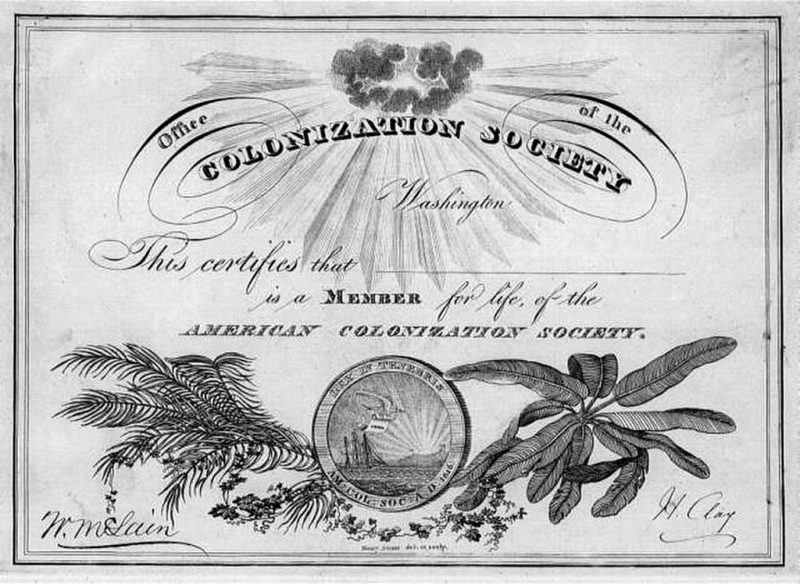
To understand that connection, you have to go back to 1816 and the Rev. Dr. Robert Finley, pastor of the Basking Ridge Presbyterian Church. Finley became a driving force behind the creation of the American Colonization Society, which sought to establish an African colony for free Black Americans. Finley died in 1817 and never saw the colony himself, but the organization he helped create established settlements on the West African coast that became Liberia in 1824 and eventually the independent Republic of Liberia in 1847. Remarkably, a story appearing in today’s headlines has roots that lead directly back to a minister from Basking Ridge, New Jersey.
Dr. Robert Finley’s Work To Help Blacks, Defeat Slavery, and Colonize Liberia
An abolitionist, as the name implies, is a person who sought to abolish slavery during the 19th century. Finley, an abolitionist, believed that black people would face better chances for freedom and prosperity in Africa than in the United States. Also, if there were a colony available to them where they could be resettled, abolitionists hoped to gain more manumissions of enslaved people and eventually end the institution. African Americans gradually moved into government positions. The Republic of Liberia declared its independence on July 26, 1847. Between January 7, 1822, and the American Civil War, more than 15,000 freed and free-born black Americans and 3,198 Afro-Caribbeans relocated to the African settlement.
Many remember that Dr. and Reverend Robert Finley was a pastor for 20 years at a Presbyterian church in Basking Ridge, New Jersey. Finley also taught school at a boys’ academy known locally as the Brick Academy and the Basking Ridge Classical School.

Dr. Robert Finley was born in Princeton, New Jersey, on February 13, 1772, to his parents, James and Ann Finley. He attended the College of New Jersey and graduated at the age of 15.

on May 16, 1798.
Robert later married Esther Flynt Caldwell of Elizabeth on May 16, 1798, the daughter of Dr. James Caldwell. They had nine children: Mary Louise Ogden Finley, Helen Smith Finley, James Caldwell Finley, Robert Smith Finley, Josiah Coldwell Finley, Anna Morford Finley, John Edwards Caldwell Finley, Susan Bradford Finley, and Hannah Smith McKinley.
In 1795, Finley was ordained as the 4th Pastor of the Presbyterian Church at Basking Ridge, where he served for 20 years as a popular preacher and noted educator. He originated the concept of the modern Sunday School.

Finley’s name honors his legacy and his support in naming Main Street in Basking Ridge. But what many people don’t know is that Dr. Robert Finley was distressed with the way in which blacks were being treated in America, so he founded the American Colonization Society (ACS) in 1816 with George Washington’s nephew, Bushrod Washington, proposing to abolish slavery and relocate free American blacks to a colony in West Africa.
Philadelphia Protest
On January 15, 1817, nearly 3,000 African American men met at the Bethel A.M.E. Church (popularly known as Mother Bethel AME) in Philadelphia. They denounced the American Colonization Society’s plan to resettle free blacks in West Africa. This gathering was the first black mass protest meeting in the United States EVER. The black leaders who summoned the men to the church endorsed the ACS scheme and fully expected the black men who gathered there to follow their leadership. Instead, they rejected the scheme and forced the black leaders to embrace their position.


Bishop Allen and other black leaders who had endorsed the ACS called the meeting in Bethel A.M.E. Church. Some 3,000 black men, virtually the entire black male population of Philadelphia, gathered to hear about colonization. Black leaders expected African American men in the city to endorse the ACS and Cuffee’s colonization schemes. Instead, they received a denunciation of the plan. Apparently, the black men feared that all free blacks would be compelled to go to Africa, especially those in the slaveholding states. They saw (correctly, as it turns out) that the ACS scheme allowed slaveholders to get rid of free blacks. The January 1817 gathering of African American men became the first African American protest meeting on U.S. soil.
Finley Accepts Role to Lead University of Georgia
In 1817, Robert Finley accepted an offer to become President of the University of Georgia after serving for two decades as a pastor and educator in Basking Ridge, New Jersey. His reputation as a scholar and moral leader had reached the southern states, where the young university sought a strong guiding hand. Finley resigned from his church and prepared for the long journey to Athens, Georgia, a difficult trip in an era before railroads. He likely traveled by stagecoach and riverboat through the Carolinas, a route that could take several weeks and expose travelers to fatigue and illness.

During this journey, Finley became seriously sick but continued, determined to fulfill his new duties. He arrived in Athens that summer and formally assumed the presidency, though his health never recovered. After only a few months in office, he died on October 3, 1817, at age 49, and was buried in Jackson Street Cemetery on the university’s North campus. His short tenure marked a tragic end to a life devoted to education and moral reform. He never got to recognize his dream of helping blacks become a free and self-determining group.
Josiah F.C. Finley
Dr. Robert Finley never lived to see the African colonization movement he helped launch develop into Liberia, but one of his sons actually carried the family connection to Africa. Josiah F. C. Finley, a graduate of the College of New Jersey (Princeton) in 1828, arrived in Monrovia in September 1834, where he became superintendent of schools. Three years later, he was appointed governor of a separate American colonization settlement on the Sinoe River, established by the Mississippi State Colonization Society, with its principal community named Greenville.
Sadly, Finley’s life there ended violently in September 1838 while traveling from Greenville toward Monrovia; he was killed in a conflict involving members of the Kru people, Indigenous West Africans who had inhabited the coastal regions of present-day Liberia and Côte d’Ivoire long before the arrival of American colonists. The Kru were particularly renowned as skilled fishermen, canoe operators, sailors, and coastal traders. The circumstances surrounding Finley’s death remain murky and subsequently contributed to escalating violence between American colonists and Indigenous communities along the Liberian coast.
Thus, more than twenty years after Robert Finley helped establish the American Colonization Society, his own son became directly involved in the difficult and often violent effort to establish American-backed settlements in West Africa.
American Colonization Society After Finley
The American Colonization Society gained support from both abolitionists and slaveholders for different reasons. Free blacks faced discrimination in both the free states of the North, where slavery was abolished after the Revolution (in a gradual process in some places), and in the slave societies of the South. In the latter areas, free blacks were feared as being influential in disrupting enslaved people and leading slave rebellions.

Liberia’s capital carries an unmistakably American name. After the American Colonization Society established a permanent settlement at Cape Mesurado on the West African coast in 1822, the community was initially called Christopolis, meaning “City of Christ.” In 1824, the ACS renamed the settlement Monrovia in honor of President James Monroe, one of the colonization effort’s most prominent supporters. Monroe had backed the movement politically, and his administration secured federal funding that assisted the project. At the same time, the larger colony was formally named Liberia, derived from the idea of liberty, or “land of the free.” Monrovia therefore became one of the relatively few national capitals in the world named for a United States president.

While President after President endorsed the American Colonization Society, the country and the concept ultimately fell apart for several reasons. The emigrants dealt with severe challenges upon their arrival in Liberia, and the poor living conditions in the colony deterred other free Black people from settling in the colony. The settlers suffered from a high mortality rate and faced hostility from the indigenous peoples who tried to defend their homeland from colonizers.
The ACS’s efforts to receive funding from state and federal governments, as well as private donors, also deteriorated as reports from Liberia revealed difficulties in settling the land. These reports also undermined interest from the free Black community and created additional funding problems for the colony. The ACS also lacked the funding to support multiple voyages to and from Liberia successfully, and to maintain and protect the colony. Despite having significant private and public backing at the local and national levels at the beginning, the ACS and colonization were not sustainable ideas. After Liberia gained independence in 1847, the organization stagnated further, and the American Colonization Society formally dissolved in 1964.
Final Thoughts
In theory, colonization seemed like an ideal solution to complicated, intertwined problems involving slavery, race relations, and preserving the Union. U.S. Presidents during Finley’s pastorate included George Washington, John Adams, Thomas Jefferson, and James Madison, all of whom supported the policies of the American Colonization Society. Many members viewed their efforts as benevolent, but they gave little consideration to the opinions of free African Americans or how these measures would impact individuals, families, and communities of color.
Looking back, Robert Finley’s vision and efforts came decades before the nation confronted slavery’s full moral crisis in the Civil War. His ideas emerged when the young republic struggled to reconcile liberty with human bondage. Though the American Colonization Society ultimately failed to resolve that contradiction, Finley’s work reflected the reform spirit of the early nineteenth century, when churches, educators, and civic leaders sought gradual paths to freedom. His belief that education and faith could transform lives guided both his ministry in Basking Ridge and his founding of the Brick Academy. Finley’s death in 1817 ended his direct influence. Still, his early advocacy for change placed him among the first Americans to publicly challenge the permanence of slavery, helping to lay the groundwork for the larger national debate that would come a generation later.
Additional Information
Listen to a rare historical church service as Reverend Dennis Jones of the Basking Ridge Presbyterian Church recites with Dr. Robert Finley, founder of the Basking Ridge Classical School, at the Brick Academy Schoolhouse in Basking Ridge.
Our researchers located a digital version of the book “Biography of the Rev. Robert Finley, D.D. of Basking Ridge, New Jersey. With an Account of His Agency as the Author of the American Colonization Society; Also a Sketch of the Slave Trade; A View of Our National Policy and That of Great Britain Towards Liberia and Africa.
A very interesting scan to look at.

Click here to view
Updated: September 16, 2026
Original Post: October 19, 2000


